
Access Lehi Property Tax Records
Lehi property tax records are maintained by Utah County, which handles all property assessment, billing, and collection within city limits. Lehi is one of the fastest-growing cities in Utah and sits at the heart of the Silicon Slopes tech corridor, home to large campuses for major technology companies. That rapid growth means new parcels are added to the assessment roll each year and existing values shift with the real estate market. This guide explains how to find Lehi property tax records, how the county values your property, what exemptions apply, and how to appeal if your assessment seems off.
Lehi Quick Facts
Utah County Assessor and Lehi Property Values
The Utah County Assessor handles all valuation work for properties in Lehi. The city does not assess property on its own. Each parcel is valued at 100% of fair market value as of January 1 each year under Utah Code Title 59, Chapter 2. Lehi's real estate market has seen significant appreciation driven by the demand from tech workers and families moving into new subdivisions. That growth shows up in the assessment data each year.
The assessor's online search portal at utahcounty.gov/Assessor lets you look up any Lehi parcel by address, owner name, or parcel number. You will find the full property record, including assessed value split between land and improvements, taxable value after exemptions, ownership history, and legal description. The assessor values residential, commercial, and industrial properties in Lehi, each using the valuation method best suited to that property type.
The official Lehi city website provides access to development services, permits, and city programs relevant to property owners in the city.
The Lehi city portal connects to development and permit resources that feed into the Utah County Assessor's tracking of new construction and improvements across the city.
Lehi Growth and the Assessment Roll
Lehi is one of the most active construction markets in Utah. New subdivisions, commercial parks, and tech office campuses are added each year. When the Utah County Assessor receives a certificate of occupancy for a newly built structure in Lehi, that building is added to the assessment roll for the first time. New construction is assessed at its full market value based on construction costs and comparable sales. Property tax bills for new Lehi homes are often notably higher than what the prior lot owner paid, which surprises some buyers.
Large tech company campuses in Lehi, including properties owned by some of the nation's biggest technology firms, are assessed as commercial parcels at full market value. These parcels contribute significantly to the overall tax base in Lehi and help spread the cost of city services and school funding across a broader value base. Some centrally assessed properties, such as utility infrastructure, are valued by the Utah centrally assessed property system rather than the county assessor directly.
Lehi's Development Services department at lehi-ut.gov/development handles zoning, platting, and building permits. These records track what is being built and where. The assessor pulls permit data from Development Services to stay current on new construction and improvements. If you are buying land in Lehi and want to know what is entitled or under permit, Development Services is the right office to contact.
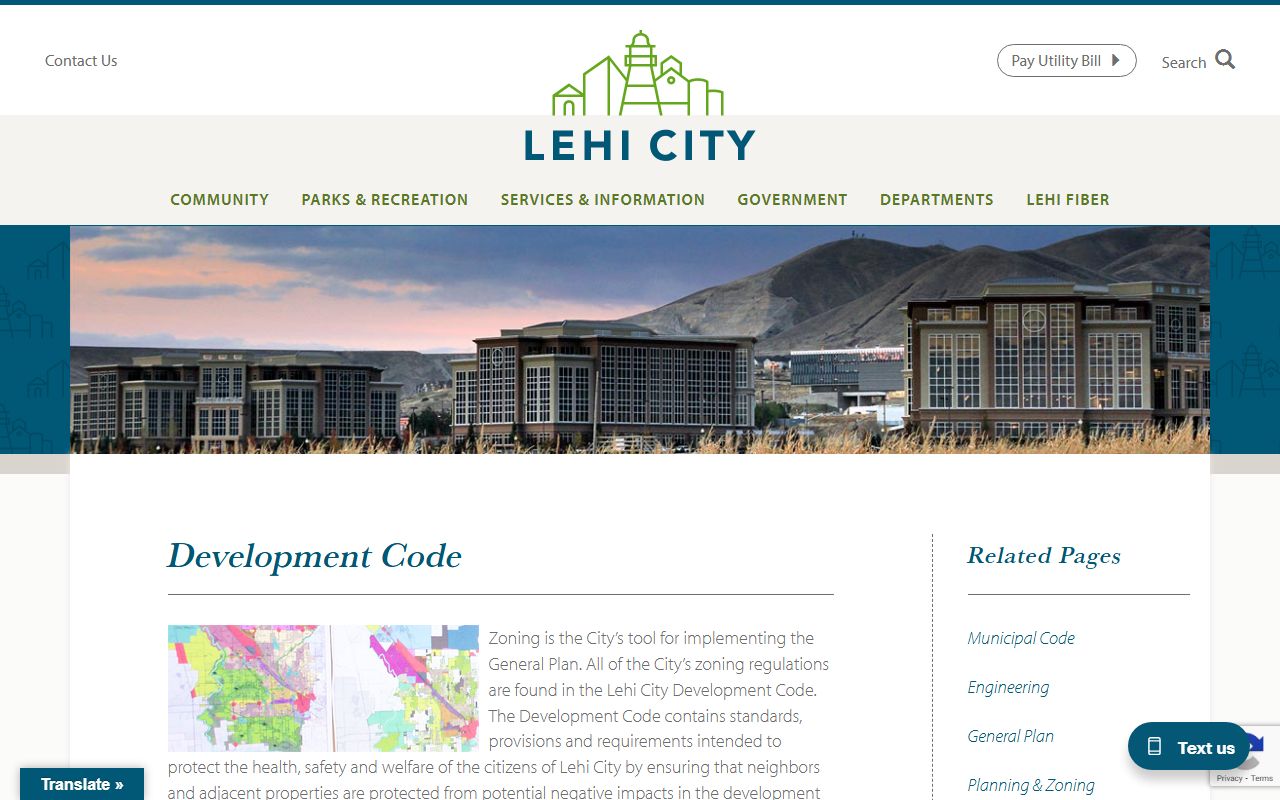
The Lehi Development Services portal provides permit history, zoning records, and subdivision information that directly affects how properties are classified and valued on the Utah County assessment roll.
Note: Lehi's rapid growth means the assessment roll changes significantly each year. If you bought a newly built home, compare your first assessment notice carefully against the purchase price.
Searching Lehi Property Tax Records Online
The Utah County Land Records portal at utahcounty.gov/landrecords is the primary search tool for Lehi property data. It offers multiple search methods including owner name, address, parcel number, and legal description. The results show the current and prior year assessments, ownership history, and links to recorded documents. No login is required. The tool is free and accessible to anyone.
The Utah County GIS portal at is.utahcounty.gov/gis/maps provides a map-based view of Lehi parcels. Click on any lot to see owner name, assessed value, and parcel details. This is useful for researching neighboring properties or checking boundaries when you do not have a parcel number. The GIS tool also shows zoning overlays, which can reveal how a property is classified and whether any recent land use changes have occurred.
The Utah state GIS portal at gis.utah.gov includes a statewide parcel layer that covers Lehi and all of Utah County. This is useful for broader geographic research or when you want to compare parcels across county lines.
Lehi Property Tax Exemptions
The most valuable exemption available to Lehi homeowners is the 45% primary residence exemption. Under Utah Code Title 59, Chapter 2, owner-occupants pay tax on only 55% of their home's assessed value. The county applies this when the property is classified as a primary residence. If you moved into a Lehi home recently and the exemption is not showing on your record, contact the Utah County Assessor to update the classification.
Rental properties in Lehi do not qualify for the primary residence exemption. Given the large number of new homes being rented out to tech workers and other newcomers, this is a common issue. If you own a home in Lehi and rent it out, the full assessed value is subject to tax. If you later move in and make it your primary residence, file for the exemption with the assessor at that time.
The state Circuit Breaker program offers additional relief for low-income elderly and disabled property owners in Lehi. This income-based refund is administered by the Utah State Tax Commission. Apply at tax.utah.gov/contact/property-tax by the annual deadline. Agricultural land exemptions also exist for qualifying parcels. Lehi still has some agricultural land on its fringe that may qualify for reduced agricultural valuation.
Paying Lehi Property Taxes
The Utah County Treasurer collects property taxes for all Lehi parcels. Tax notices go out in the fall. The full balance is due by November 30. Pay at utahcounty.gov/Treasurer online by e-check or credit card, by mail, or in person at the county building in Provo. The treasurer's portal shows your current balance, prior payments, and any outstanding delinquent amounts.
Many Lehi homeowners pay through a mortgage escrow account. If so, your lender handles the payment each year. Still, it is smart to log into the treasurer's portal annually and confirm payment was made. Escrow errors do happen. The tax lien stays with the property, and delinquencies accrue interest regardless of who was supposed to pay.
If you have delinquent Lehi property taxes, contact the Utah County Treasurer's office before the situation reaches the tax sale stage. The office can explain your options and help you understand what you owe. The Utah Property Tax Division also has information on assistance programs that may apply to your situation.
How to Appeal Your Lehi Property Assessment
Lehi property owners can appeal their assessed value to the Utah County Board of Equalization. The deadline is on your assessment notice. File before that date. The board looks at evidence from both the property owner and the assessor and issues a ruling. Filing is straightforward and does not require legal help for most residential cases.
To build your case, find recent sales of comparable Lehi homes. Look for properties similar in size, age, and condition that sold for less than your assessed value. Sales from the twelve months before January 1 carry the most weight. You can find this data through the Utah County Recorder's database, real estate platforms, or by hiring a local appraiser. A formal appraisal from a licensed professional gives your appeal the strongest foundation.
If the county board does not reduce your value to what you believe is fair, appeal to the Utah State Tax Commission at tax.utah.gov/contact/property-tax. Phone 801-297-2200, office at 210 N 1950 W, Salt Lake City, UT 84134. The commission handles second-level appeals and makes final decisions that can be further appealed only in district court.
Note: First-year assessments on newly built Lehi homes are common appeal targets. If your new home was assessed higher than you paid for it, gather your settlement statement and any builder data to support the appeal.
Utah County Recorder and Lehi Property Documents
The Utah County Recorder at 51 S University Ave, Suite 211, Provo, UT 84601, phone (801) 851-8179, holds all recorded property documents for Lehi. The online database at utahcounty.gov/Recorder is searchable by grantor, grantee, document type, or parcel number. It covers deeds, mortgages, liens, plat maps, and easements. Most documents can be viewed online for free. Certified copies cost a per-page fee at the front counter.
For Lehi's rapidly developing areas, plat maps in the recorder's database are especially important. Plats show lot boundaries, street dedications, easements, and subdivision layouts. When a new Lehi subdivision is recorded, the plat document establishes the legal description of each new lot. That legal description is the foundation of the parcel record in the assessor's system. Any errors in the plat can carry forward into assessment records.
Always record your deed promptly after buying property in Lehi. Recording notifies the assessor of the ownership change and ensures tax notices go to the right address. Delays in recording can cause tax bills to go to the wrong person, which can lead to delinquencies even when the new owner is ready and willing to pay.
Utah County Property Tax Records
Utah County manages all property tax assessment, recording, and collection for Lehi. The county assessor, recorder, and treasurer offices serve all Lehi property owners and can be reached online or in person at the county building in Provo.
Nearby Cities
These nearby cities in Utah County use the same county offices for property tax records and assessment services.