
Search Utah Property Tax Records
Utah property tax records are public documents held by county assessors, recorders, and treasurers across all 29 counties in the state. Each county maintains assessment rolls, tax payment history, parcel data, and deed records tied to real property. The Utah State Tax Commission oversees the system and sets valuation standards that every county must follow. You can search Utah property tax records online through county portals and the state GIS system, or visit county offices in person to get what you need.
Utah Property Tax Quick Facts
How Utah Property Tax Records Work
Property taxes in Utah are managed at the county level under the oversight of the Utah State Tax Commission. Each of Utah's 29 counties has its own assessor who values all taxable real property within county lines. State law requires assessors to set values at 100% of fair market value as of January 1 each year. Under Utah Code § 59-2-103, fair market value is the amount at which property would change hands between a willing buyer and a willing seller when neither is under pressure to act. This standard keeps all assessments tied to current market conditions.
Once a county assessor sets property values, the county auditor calculates the tax rate based on budgets submitted by all local taxing entities. Those entities include the county itself, cities, school districts, and special service districts. Utah uses a Truth in Taxation process to keep rates open to public review. Under this system, any taxing entity that wants to collect more than the certified rate requires must hold public hearings and notify property owners directly. This ties tax increases to deliberate public decisions rather than automatic rate adjustments. Any Utah resident can attend these hearings each year before final rates are set.
The assessment roll for each county is a public record that anyone can review.
The Utah State Tax Commission is located at 210 North 1950 West, Salt Lake City, UT 84134. The main phone number is 801-297-2200, with a toll-free line at 800-662-4335. Office hours are Monday through Friday, 8:00 am to 5:00 pm. The Commission also handles centrally assessed properties such as utilities, telecommunications companies, and railroads that cross county lines, splitting their values fairly among the counties they serve.
The Tax Commission website at tax.utah.gov provides contact information, forms, and guidance for property owners across Utah who have questions about assessments or need to reach the Property Tax Division directly.
Where to Find Utah Property Tax Records
The main source for property tax records in Utah is the county assessor in the county where the property is located. Assessors keep assessment rolls, property characteristic data, and records of any exemptions that apply. The county recorder holds deed and title documents that show the full ownership history of a parcel. The county treasurer holds tax bills, payment records, and information on any delinquent taxes. These three offices together give you a complete view of a property's tax history in Utah.
Some properties in Utah are assessed directly by the State Tax Commission rather than the local county assessor. These centrally assessed properties include utilities, mines, telecommunications companies, and transportation businesses that operate across county lines. Property Tax Division staff value these properties at the state level, then allocate assessed values to the counties where each property operates. Tax dollars from centrally assessed properties still flow to those local counties. Owners of centrally assessed parcels must file self-reporting affidavits with the State by March 1 each year, and assessment notices go out by May 1.
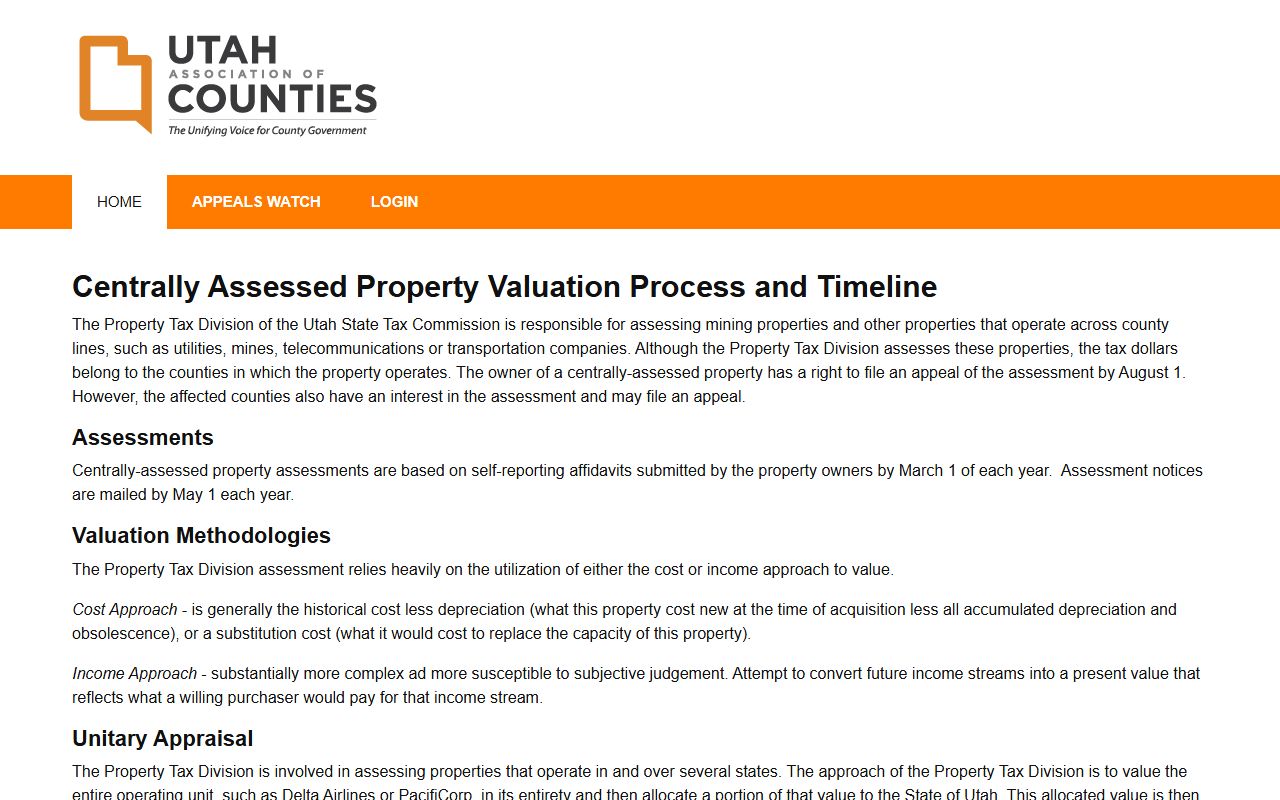
More detail on the centrally assessed valuation process, including the income approach and cost approach used to value these properties, is available through the Utah Association of Counties centrally assessed property portal. This site covers valuation methods, appeal rights, and how the Unitary Appraisal approach is applied to multistate businesses operating in Utah.
Every county recorder in Utah maintains digital versions of real estate documents that are open for public inspection. Copies can be purchased from recorder offices in person or, for many counties, through online portals.
Search Utah Property Tax Records Online
Utah offers several online tools for looking up property tax records. The Utah GIS Portal at gis.utah.gov provides statewide parcel data including ownership, boundaries, and tax roll attributes. You can search by address or location to find parcel records across all 29 counties. The portal also links to bulk data downloads at opendata.utah.gov for researchers who need larger datasets. Most county assessors maintain their own parcel search tools as well, accessible through each county's website.

To look up property tax records in Utah, you generally need the property address or the parcel identification number assigned by the county assessor. Some portals allow search by owner name as well. Once you find the parcel, you can typically view the assessed value, recent tax history, and property characteristics such as lot size and building square footage. For certified copies of records or official tax clearance letters, contact the county treasurer directly. Online records are updated regularly but may not reflect changes made in the past few weeks.
The following are the most useful online resources for Utah property tax record searches:
- County assessor parcel search portals (found on each county website)
- Utah GIS statewide parcel layer at gis.utah.gov
- County recorder document indexes and images
- County treasurer online payment history portals
- Utah open data at opendata.utah.gov
Understanding Your Utah Property Tax Assessment
Your property tax bill in Utah begins with the assessed value set by your county assessor. By law, that value must equal the full fair market value of the property as of January 1 of the tax year. From there, a three-step process produces your final tax amount. First, the market value is set by the assessor. Second, any applicable exemptions reduce the taxable portion. The most common is the primary residence exemption, which removes 45% of a home's value from the taxable base, meaning only 55% of a qualifying home's value is taxed. Third, the taxable value is multiplied by the levy rate from all applicable taxing entities to produce the final bill.
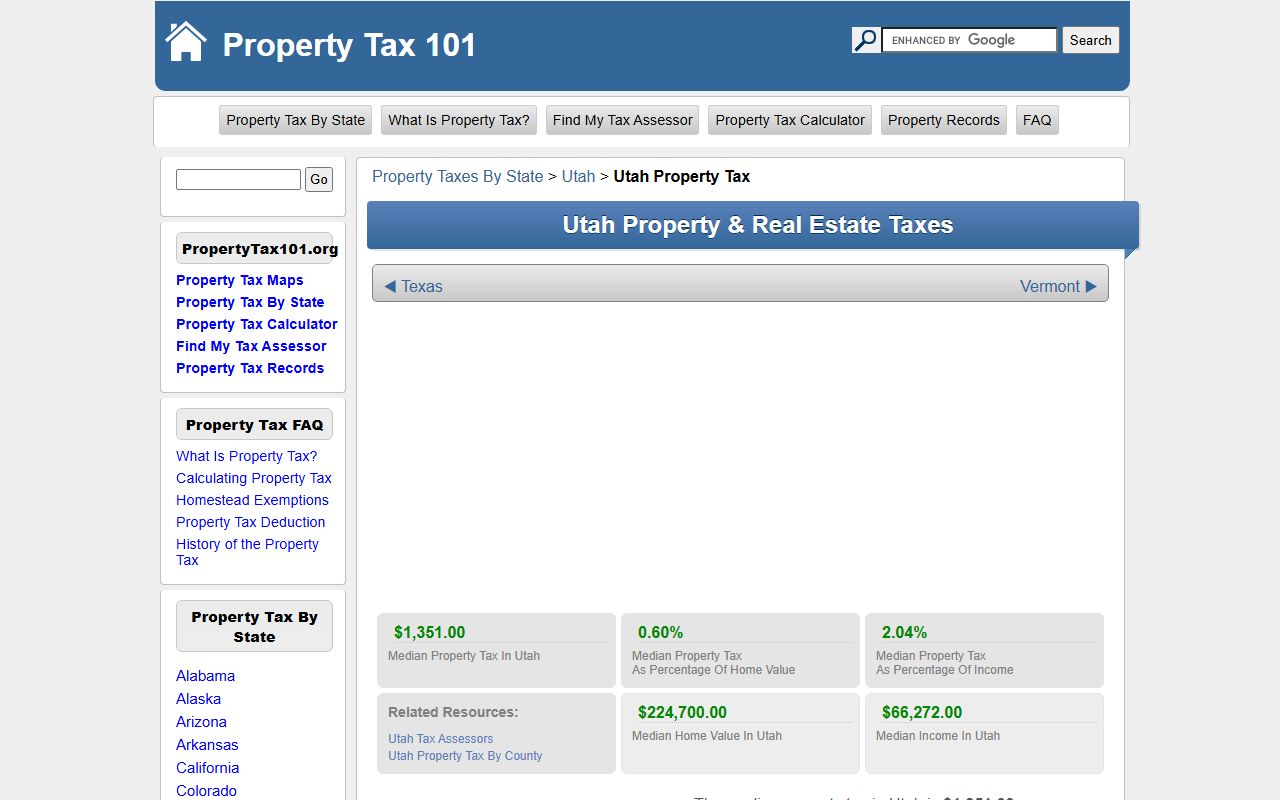
The 45% primary residence exemption keeps Utah's effective property tax rate low compared to most other states. Utah's average effective rate is roughly 0.58%, placing it 11th-lowest in the nation. Statewide, the median annual property tax is $1,351, based on a median home value of $224,700, according to data at PropertyTax101. A home assessed at $300,000 would have a taxable base of $165,000 after the primary residence exemption is applied, which significantly reduces what most Utah homeowners owe each year.
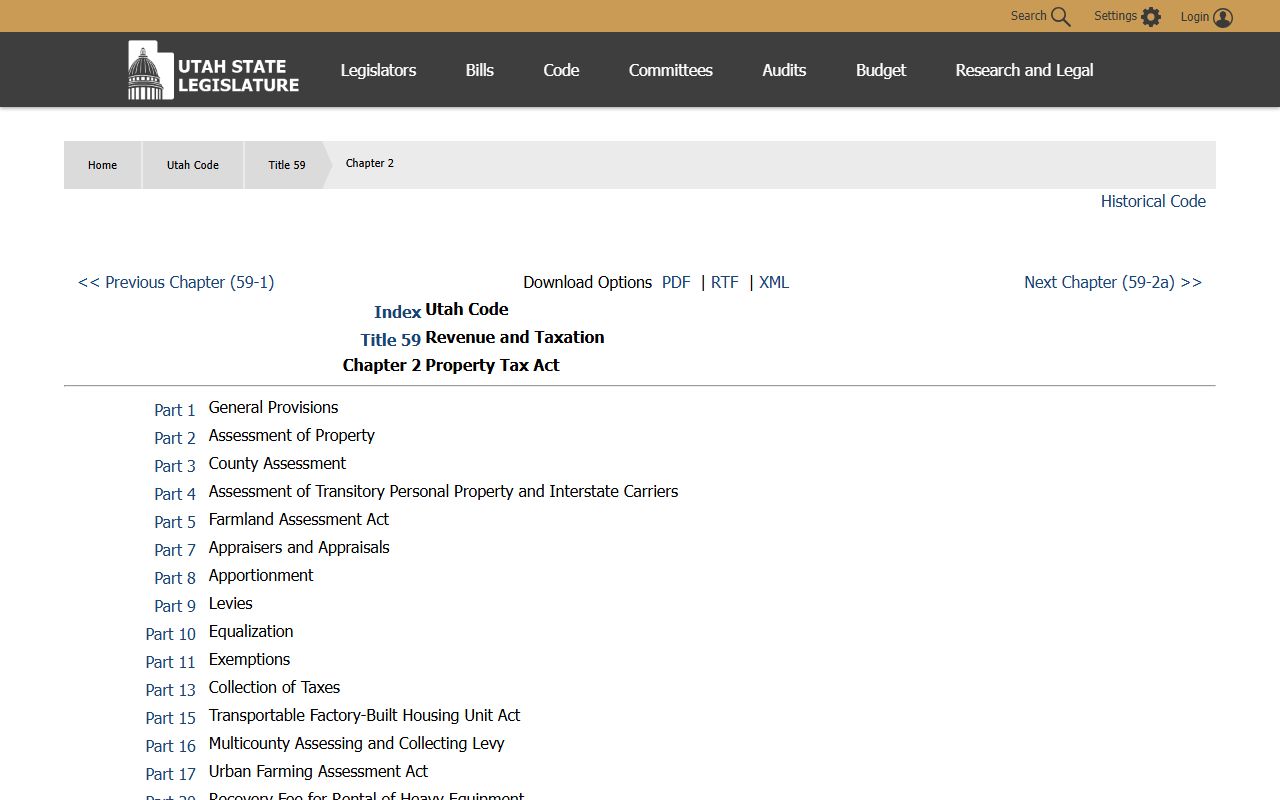
The full legal framework for property taxation in Utah sits in Title 59, Chapter 2 of the Utah Code, known as the Property Tax Act. This chapter defines real and personal property, sets the assessment date, outlines valuation methods, and describes the roles of county assessors, auditors, and treasurers. Assessors must physically inspect and review every property in their jurisdiction at least once every five years to keep valuations current. Many counties now use Paragon, the Utah Mass Appraisal system known as PUMA, which updates all parcels annually using accepted valuation methods. Currently 18 of Utah's 29 counties are on the PUMA system.
An April 2024 audit presented to the Utah Legislature identified opportunities to strengthen oversight of county assessment practices. The report, covered by the Deseret News, noted that the State Tax Commission's Property Tax Division has ongoing work to improve consistency in how counties handle annual value updates and the five-year detailed property reviews required by state law.
Davis County serves as a useful example of how fast markets affect assessments. In 2016, the average residential price in Davis County was $260,000. By 2023, that figure had reached approximately $523,000, a 101% increase that required ongoing reassessment work by county staff.
Property Tax Exemptions Available in Utah
Utah offers a range of property tax exemptions that can reduce what you owe. The primary residence exemption is the most widely used. It cuts the taxable portion of a qualifying home by 45% each year. To claim it, the property must be your primary home and you must apply through your county assessor. Agricultural land can qualify for valuation based on its productive use value rather than full market value under the Greenbelt Act. This often results in a much lower assessed value for farms and working ranches. Government-owned property and charitable organizations generally receive full exemptions from county property taxes in Utah.
The Utah Property Tax Division also administers abatement and circuit breaker programs for property owners who qualify based on income, age, or disability. Disabled veterans may qualify for reduced or eliminated property taxes depending on the extent of their service-connected disability. Low-income elderly residents can apply through their county assessor for programs that cap the amount they owe relative to their income. These programs are worth checking if your circumstances have changed.
Intangible property is fully exempt from Utah property tax under Utah Code § 59-2-110(2)(g). This covers money, stocks, bonds, patents, franchises, and similar instruments. Only tangible real and personal property is subject to county-level assessment and taxation in Utah.
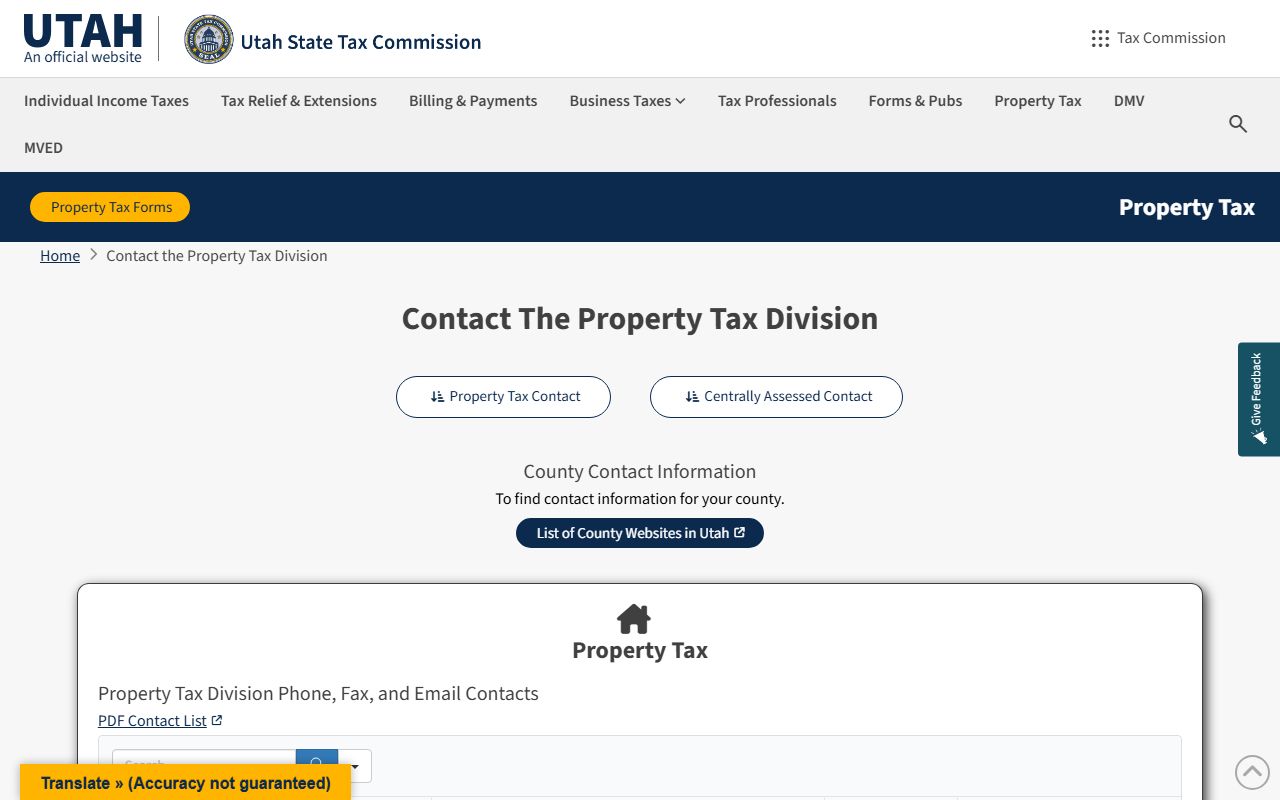
Contact your county assessor or the State Tax Commission's Property Tax Division to find out which programs apply in your county and what documentation you need to submit.
How to Appeal a Utah Property Tax Assessment
If you believe your property has been assessed too high, you have the right to appeal. The process starts at the county level through the Board of Equalization. Each county has a Board composed of local officials who review assessment disputes from property owners. You must file your appeal within the timeframe shown on your assessment notice, generally within 45 days of the mailing date. Salt Lake County uses a seven-member Board of Equalization for this purpose. Most other Utah counties follow a similar structure under the Property Tax Act.
Build your case with solid evidence. Comparable sales of nearby properties with similar characteristics carry the most weight. An independent appraisal, documentation of property defects, or records showing errors in the county's property data can also support a lower value. The hearing is informal and most property owners present their case without an attorney. If the county-level appeal does not result in the outcome you want, you can take the matter to the Utah State Tax Commission for a further review. Owners of centrally assessed properties have a separate process and must file appeals of their assessments by August 1 each year through the State Tax Commission.
Utah Property Tax Rates by County
Property tax rates vary across Utah's 29 counties. Summit County carries the highest median property tax at $1,921 per year, based on a median home value of $492,100 and an effective rate of 0.39%. Salt Lake County comes next at a median of $1,588, based on a $237,500 median home value and an effective rate of 0.67%. At the lower end, Rich County has the lowest median tax in the state at just $422 per year, and Wayne County follows at $563. A complete comparison is available at PropertyTax101's Utah county tax breakdown.
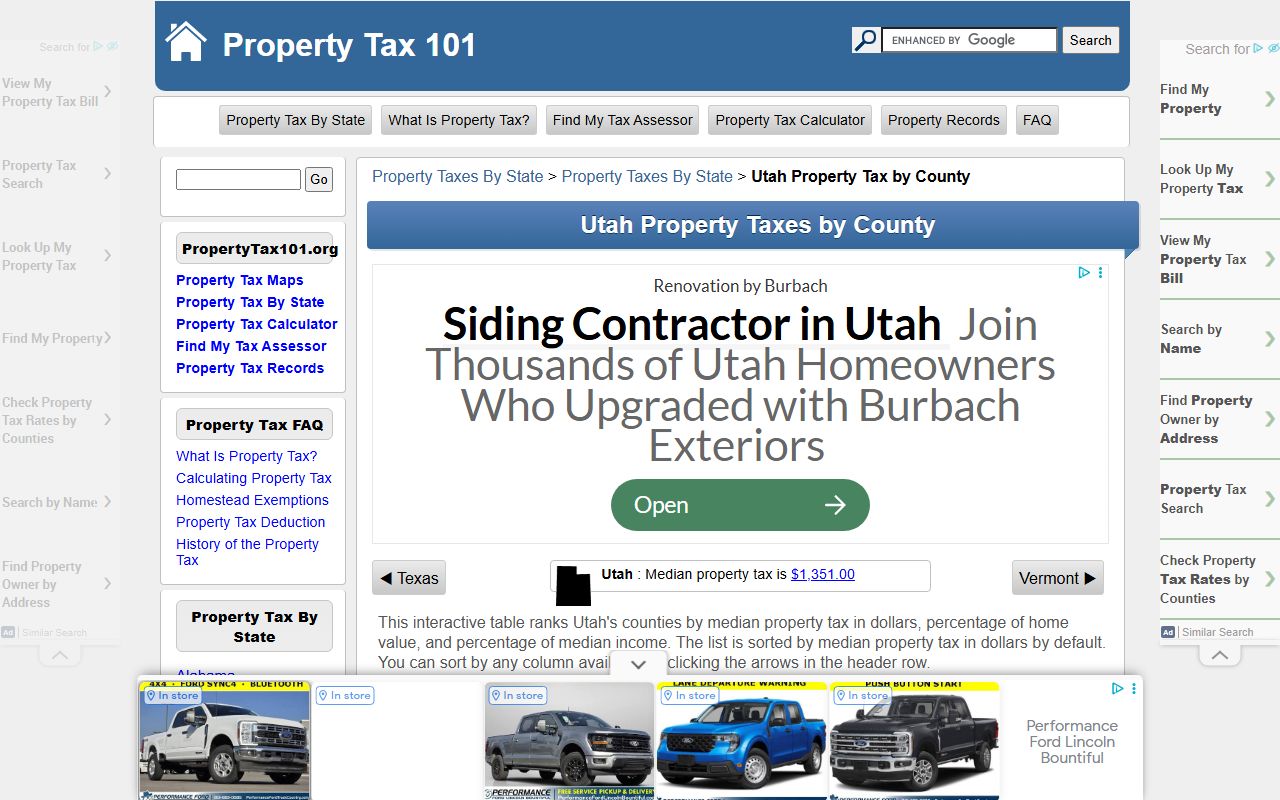
Differences in rates across Utah reflect local budget decisions as much as they reflect property values. Weber County, with a median home value of $168,300, has an effective rate of 0.77%, making it one of the higher-rate counties even though home values rank relatively low. Davis County residents pay a median of $1,354 based on home values averaging $224,400. Morgan County has a median of $1,303 on a home value of $260,600. Understanding these differences helps when comparing the cost of owning property in different parts of Utah.
Note: Rates change each year as taxing entities set new budgets through the Truth in Taxation process. Check your county assessor or treasurer for the current certified tax rate in your area.
Historical Utah Property Tax Records
Salt Lake County Archives maintains tax appraisal records from approximately 1970 through 1991, searchable by address or tax parcel number. These records document assessed values on residential and commercial property and can include lot descriptions, building ages, construction details, photographs taken by assessors during field visits, and footprint sketches. The Salt Lake County Archives holds property records going back to 1853, covering more than a century of property ownership and valuation history in the county. These materials are useful for historical research into past ownership, building changes, and land use.
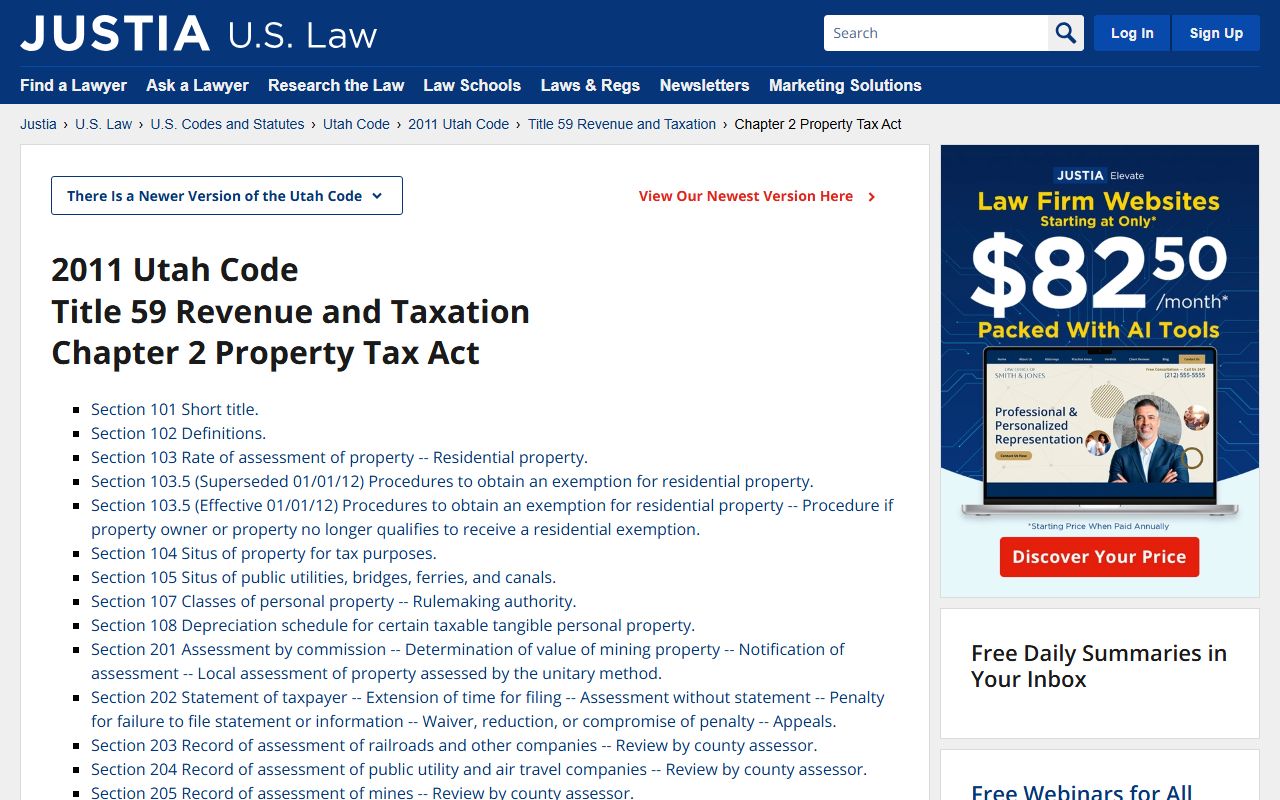
For older code references, the Justia archive of the Utah Property Tax Act covers historical versions of the statutes that governed how assessments were conducted in prior years. The Utah SGID GIS data index also contains historical parcel boundary files that can be compared with current records to track changes in land division over time.
For the most current property tax records in any Utah county, contact the county assessor, recorder, or treasurer directly. County offices can provide certified copies and official lookups that online databases may not reflect in real time.
Browse Utah Property Tax Records by County
Each of Utah's 29 counties maintains its own property tax records through local assessor, recorder, and treasurer offices. Pick a county to find specific resources for that area.
Property Tax Records in Major Utah Cities
Property taxes for Utah cities are assessed and collected at the county level. Pick a city below to find local property tax resources for that area.