
Find Sevier County Property Tax Records
Sevier County property tax records are maintained by the county Assessor, Recorder, and Treasurer offices in Richfield, Utah. These offices handle property valuation, document recording, and tax collection for all taxable parcels in this rural central Utah county. If you need a current assessed value, an ownership history, a tax balance, or parcel details for any property in Sevier County, the county offices in Richfield are your starting point. This page walks through each office and explains how to find the records you need.
Sevier County Quick Facts
Sevier County Assessor and Property Valuation
The Sevier County Assessor determines the value of all taxable property in the county. Assessments are as of January 1 each year, which is the standard date set by Utah state law. The Assessor uses sales data, cost studies, and income analysis to arrive at fair market value for each parcel. Sevier County has 17,687 parcels in its assessment roll, and the county maintains strong data coverage across most parcel attributes.
Sevier County's parcel database has excellent coverage for key data fields. Owner name is documented on 99% of parcels. Mailing address coverage is at 97%, as are improvement value, land value, total parcel value, and annual tax bill. Latitude and longitude coordinates are available for all parcels at 100% coverage. Last sale price is the one area with lower coverage at 47%, which is common in rural counties where many property transfers happen between family members or through non-standard transactions.
Utah law requires assessments to reflect fair market value under Title 59, Chapter 2 of the Utah Code. For residential properties used as a primary home, the 45% primary residence exemption reduces the taxable portion to 55% of the assessed value. On a Sevier County home assessed at $148,300, that exemption brings the taxable value down to about $81,565. Contact the Assessor's office in Richfield to apply if you have not already done so.
Agricultural properties in Sevier County may qualify for the Greenbelt Act, which assesses farm and ranch land based on its productive agricultural value rather than its highest potential market value. This keeps tax burdens manageable for the working farms and ranches that make up much of the county's land base. The Assessor reviews Greenbelt applications annually to confirm that land is still in active agricultural use.
The image below is from the Utah State Tax Commission website, which provides oversight of all county assessors and sets the standards that the Sevier County Assessor follows.

The State Tax Commission site covers assessment standards, exemption rules, and contact information for the Property Tax Division that oversees Sevier County and all other Utah counties.
Note: Sevier County's effective rate of 0.54% is one of the lower rates in Utah. The median annual tax of $795 reflects both the lower rate and the relatively modest home values in this rural county.
Sevier County Recorder Property Documents
The Sevier County Recorder is where all real property documents are filed and preserved. Deeds, mortgages, deeds of trust, mechanic's liens, easements, plats, and other instruments affecting title to real property in Sevier County must be recorded here to be legally effective against third parties. The Recorder maintains a chronological index of all recorded documents, which gives you a complete chain of title for any parcel in the county going back to its earliest recorded history.
Property tax records and Recorder documents work together. The Assessor's ownership records are updated from deeds filed with the Recorder. If you buy a property in Sevier County and need to make sure the tax records reflect your name, the deed must be recorded first. Once the Recorder indexes the new deed, the Assessor updates the assessment roll to show the new owner. There is usually a short lag between recording and the Assessor's database update, but both offices work from the same source documents.
You can search Sevier County recorded documents through the Recorder's office in Richfield. Some document types are searchable online through the county's web portal. For certified copies of recorded instruments, contact the Recorder directly. Plain copies are available at a lower cost than certified copies.
Note: The Recorder indexes documents by grantor and grantee name as well as by parcel number. If you are searching for all documents affecting a specific parcel, search by parcel number for the most complete results.
Sevier County Treasurer Tax Payments and Records
The Sevier County Treasurer collects all property taxes and manages the tax accounts for every parcel in the county. Tax notices are mailed each fall, and the full payment is due by November 30. Utah law also allows payment in two installments: the first half by November 30 and the second half by May 31 of the following year. If you miss the November deadline, the tax becomes delinquent and interest starts to accrue.
The Treasurer's office is the place to check if there are any outstanding taxes on a property. This is an important step in any real estate transaction. Title companies and buyers routinely request a tax certificate from the Treasurer before closing to confirm there are no delinquent taxes that would carry over to the new owner. The Treasurer can provide current balances, delinquency history, and payment receipts for any parcel in Sevier County.
If a property falls seriously behind on taxes, Utah law allows the county to initiate a tax sale after five years of nonpayment. The Treasurer manages the delinquent list and can tell you if any property you are researching is at risk of a tax sale. For active payment options, the Treasurer's office in Richfield accepts payment in person, by mail, and in some cases online.
The screenshot below shows the Utah State Tax Commission's property tax overview, which explains how tax collections and distributions work across all Utah counties, including Sevier.
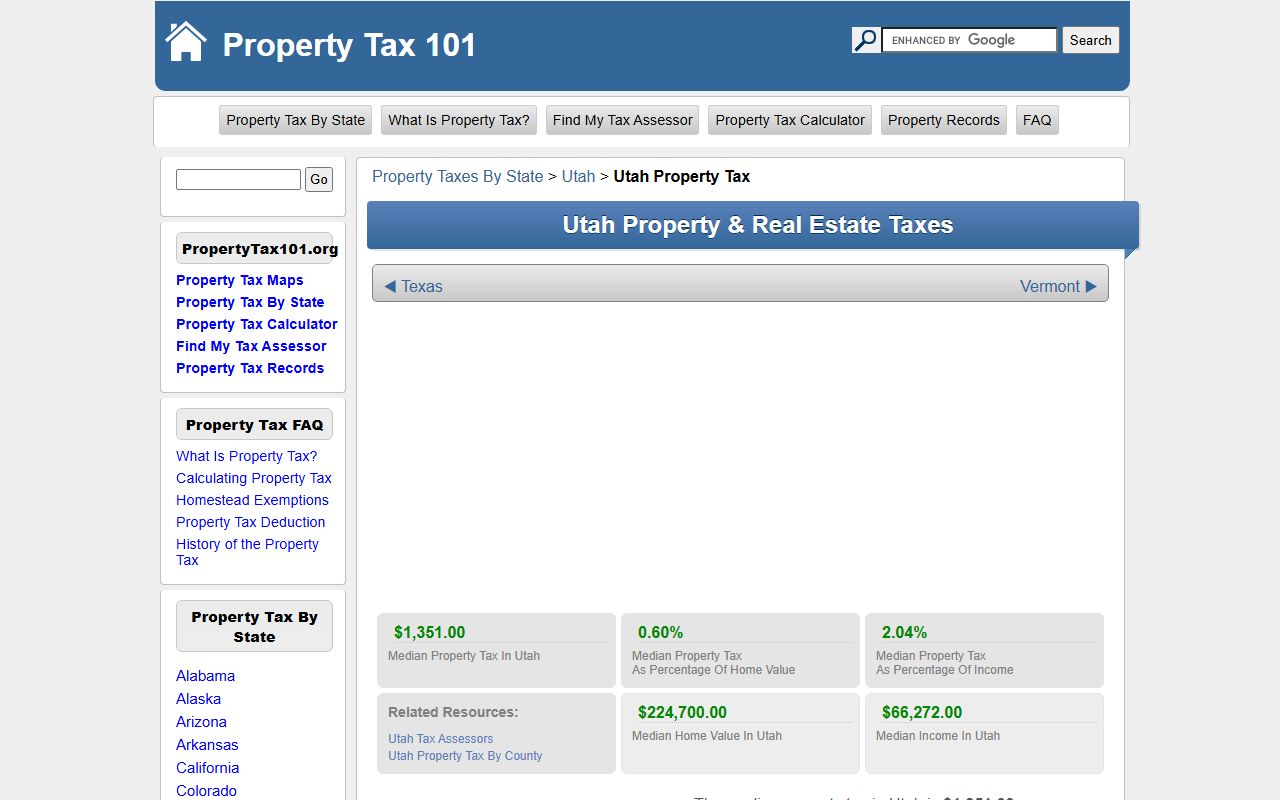
This resource provides statewide context for Sevier County's tax levels and shows how the county compares to others across Utah.
Truth in Taxation and Rate Setting in Sevier County
Utah's Truth in Taxation process governs how property tax rates are set each year. When property values rise across Sevier County, taxing entities are required to lower their rates enough to collect the same total revenue as the prior year. If any taxing entity wants to bring in more money, it must hold a public hearing, publish notice in the local newspaper, and give property owners a chance to comment before the rate is certified.
This process applies to every taxing entity that levies on Sevier County property: the county general fund, school districts, water conservancy districts, special service districts, and others. Each entity goes through Truth in Taxation independently. Your annual tax notice lists each taxing entity and the rate it levied. The combined rate is what produces your total bill.
The Truth in Taxation requirement has been part of Utah law since 1985 and is one reason Utah's property tax system is considered relatively stable. Even when assessed values rise quickly, the automatic rate adjustment prevents tax bills from increasing at the same pace unless the public hearings result in voter- or council-approved increases. For Sevier County property owners, this means that rising home values do not automatically translate into higher tax bills unless taxing entities take deliberate action to raise their rates.
You can review how Sevier County's rates compare to other Utah counties through PropertyTax101.org's county rate data. Sevier County's 0.54% effective rate is among the lower rates in Utah, reflecting both the Truth in Taxation discipline and the modest assessed values in this part of the state.
Note: Truth in Taxation hearings are public. If you want to comment on a proposed rate increase, check the county website or local newspaper for notice of upcoming hearings.
Sevier County Property Tax Appeals Process
Property owners in Sevier County who disagree with their assessed value have a clear path to appeal. The first step is an informal review with the Sevier County Assessor's office. Bring evidence supporting a lower value, such as a recent appraisal from a licensed appraiser, comparable sales from nearby properties, or documentation of physical issues with the property that reduce its market value. The Assessor's office may correct the value at this stage.
If the informal review does not resolve the dispute, the next step is a formal appeal to the Sevier County Board of Equalization. You must file your appeal by September 15, or by the deadline shown on your assessment notice. The Board will schedule a hearing and give you a chance to present your evidence. Board members are not the same people as the Assessor's staff, so you get a fresh review. The Board can reduce, increase, or leave the assessed value unchanged after the hearing.
After the Board of Equalization, the next level of appeal is the Utah State Tax Commission Property Tax Division. This is the final administrative step before district court. Most appeals are resolved before reaching this level, but it is available if you believe the Board of Equalization made an error. The State Tax Commission provides forms and instructions for this type of appeal on its website.
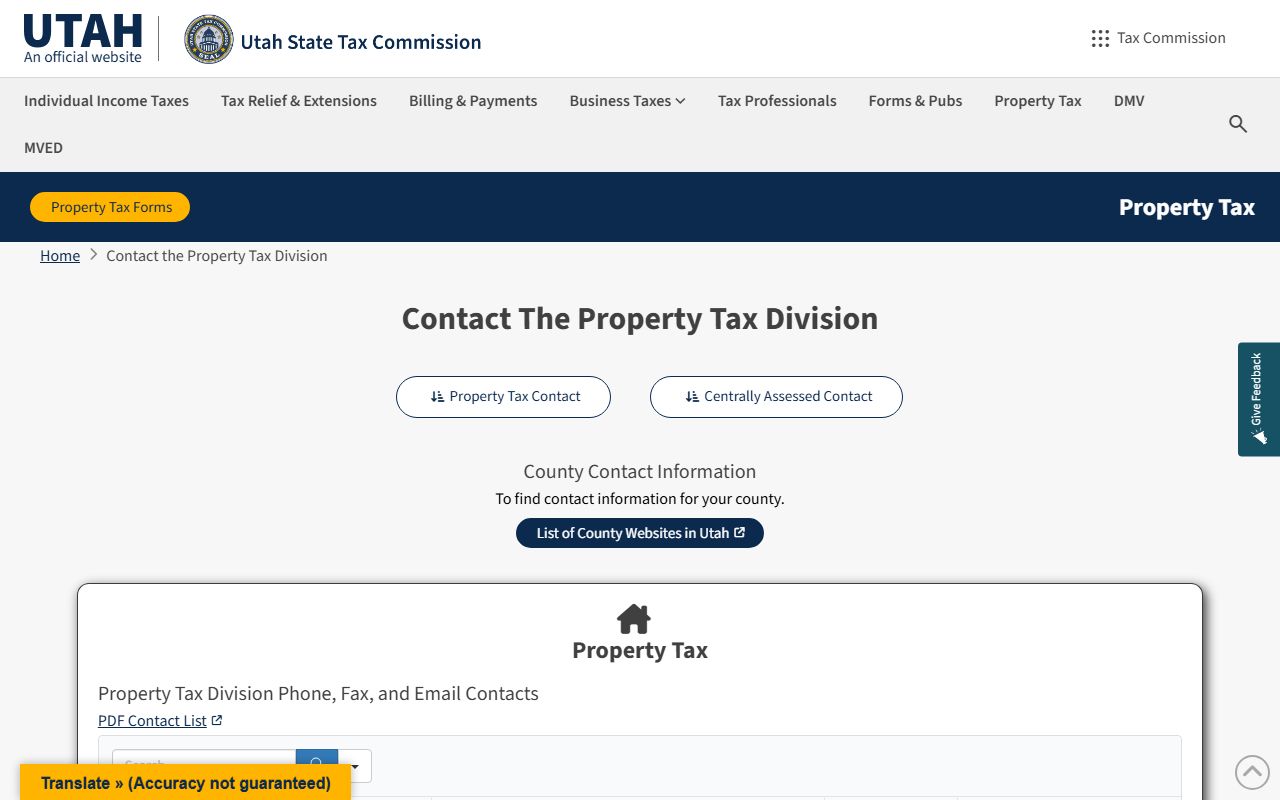
The Property Tax Division handles appeals from all 29 Utah counties and can provide guidance on the process for Sevier County property owners.
Online Search Tools for Sevier County Records
Sevier County property records can be accessed through several online channels. The county's own Assessor, Recorder, and Treasurer websites are the first place to look.
For GIS parcel mapping, Sevier County offers access through its GIS portal. Parcel maps show boundaries, parcel numbers, and property details that can help you identify a specific piece of land within the county. The Utah statewide GIS portal at gis.utah.gov also aggregates parcel data and other geographic information from counties across Utah, which can be useful for cross-county research.
The Utah property tax code is available in full through official sources. You can read Title 59, Chapter 2 of the Utah Code on the Utah Legislature's website or through Justia's version of the Utah property tax code. Both give you the legal framework that governs property taxation in Sevier County.
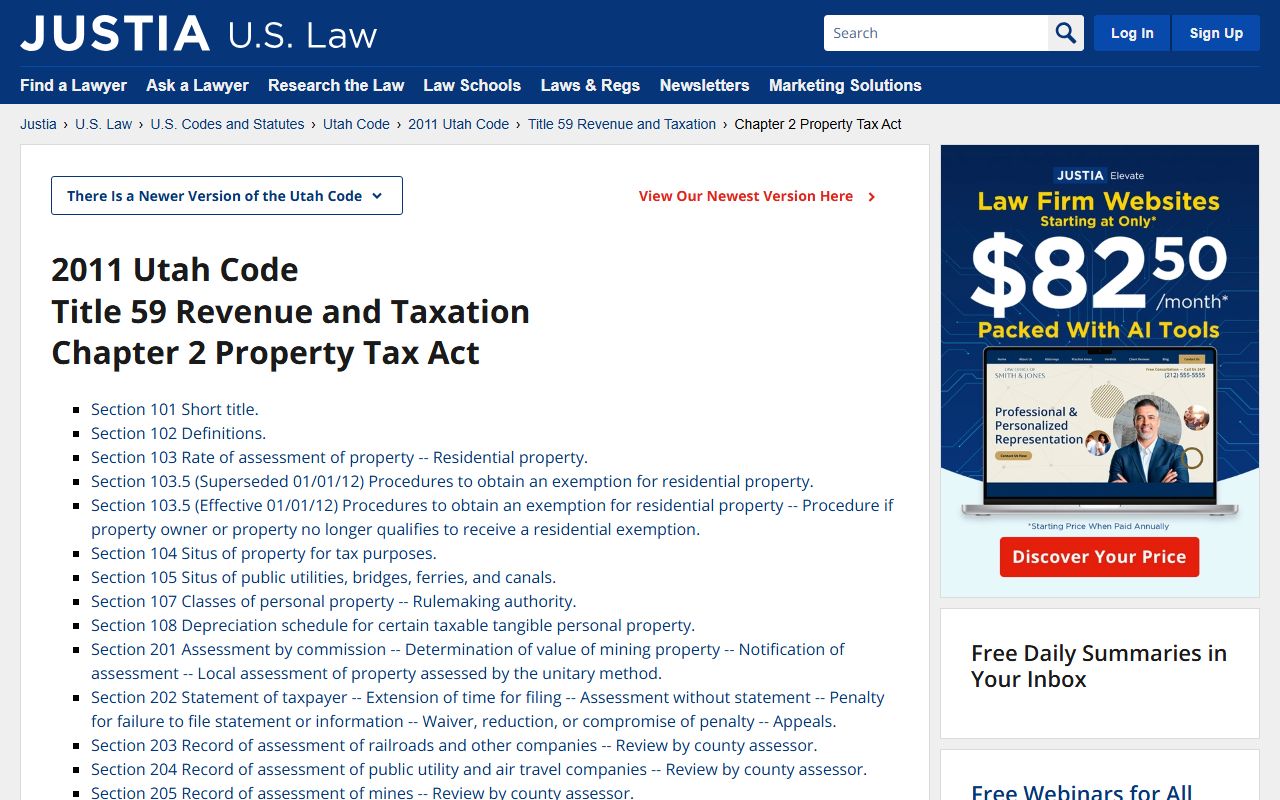
The Utah property tax code sets out the rules for assessment, exemptions, appeals, and tax sales that apply in Sevier County and every other county in the state.
Cities in Sevier County
Sevier County is a rural county with no cities that meet this site's population threshold for a dedicated city page. Richfield is the county seat and the largest community in Sevier County. All property tax records for residents and property owners throughout the county are handled through the county offices in Richfield. There are no city-level property tax records in Sevier County separate from the county system.
Nearby Counties with Property Tax Records
Sevier County borders Piute County to the southeast, Sanpete County to the north, Emery County to the northeast, Millard County to the west, and Wayne County to the south. Each of these counties maintains its own property tax records through local county offices.