
Find Eagle Mountain Property Tax Records
Eagle Mountain property tax records are held by Utah County, not by Eagle Mountain city. The Utah County Assessor values all parcels within Eagle Mountain city limits, and the Utah County Treasurer collects property taxes. Eagle Mountain incorporated in 1996 and has grown into one of the fastest-expanding cities in Utah, with large numbers of new subdivisions added to the tax roll each year. This page explains where to find Eagle Mountain property tax records online, how the assessment process works for a high-growth city, what exemptions apply, and what to do if you want to appeal your assessed value.
Eagle Mountain Quick Facts
Utah County Assessor for Eagle Mountain Parcels
The Utah County Assessor is the office responsible for all Eagle Mountain property tax records. The assessor manages over 275,000 parcels across Utah County using the PUMA mass appraisal system. Eagle Mountain represents a significant and growing share of those parcels, as new subdivisions have been approved and built at a rapid pace since the city incorporated.
The PUMA system assigns a unique serial number to every parcel in the county. For Eagle Mountain's newer parcels, the serial number is the most reliable identifier to use when searching. Street addresses in new subdivisions sometimes have slight variations between the city's records and the county's database, so starting with the serial number eliminates that ambiguity.
You can search Eagle Mountain parcels online at the Utah County Assessor portal by address, owner name, or parcel serial number. The results show assessed value, property class, ownership, legal description, and exemption status. For a newer parcel that was recently added to the roll, the record may be updated partway through the year as new growth data is finalized.
Note: Eagle Mountain's rapid growth means new parcels are added to the Utah County tax roll regularly. If you recently purchased in a new subdivision, confirm your parcel is enrolled and correctly valued by checking the assessor's database after your first full calendar year of ownership.
Searching Eagle Mountain Records in Utah County Systems
Utah County provides a dedicated land records portal at utahcounty.gov/landrecords that allows searches by name, address, or parcel serial number. For Eagle Mountain properties, searching by serial number tends to give the most precise results, especially for parcels in newer developments where address data may still be catching up to physical construction.
The land records portal connects to assessment data, recorded documents, and property history. It is one of the more complete property search tools in Utah and is worth bookmarking if you regularly need to look up Eagle Mountain property tax records. The portal is maintained by Utah County and reflects the same data used by county offices.
For deed and title documents tied to Eagle Mountain properties, use the Utah County Recorder at 51 S University Ave Suite 211, Provo UT 84601, phone (801) 851-8179. The recorder holds warranty deeds, trust deeds, liens, easements, and all other recorded instruments. These documents are part of the chain of title for every Eagle Mountain parcel.
Tax billing and payments for Eagle Mountain parcels are handled by the Utah County Treasurer. The treasurer's portal shows whether taxes are current, what is due, and payment history. Online payment is available.
For a map-based view of Eagle Mountain parcels, Utah County GIS provides interactive mapping tools that show parcel boundaries alongside roads, aerial imagery, and other layers.
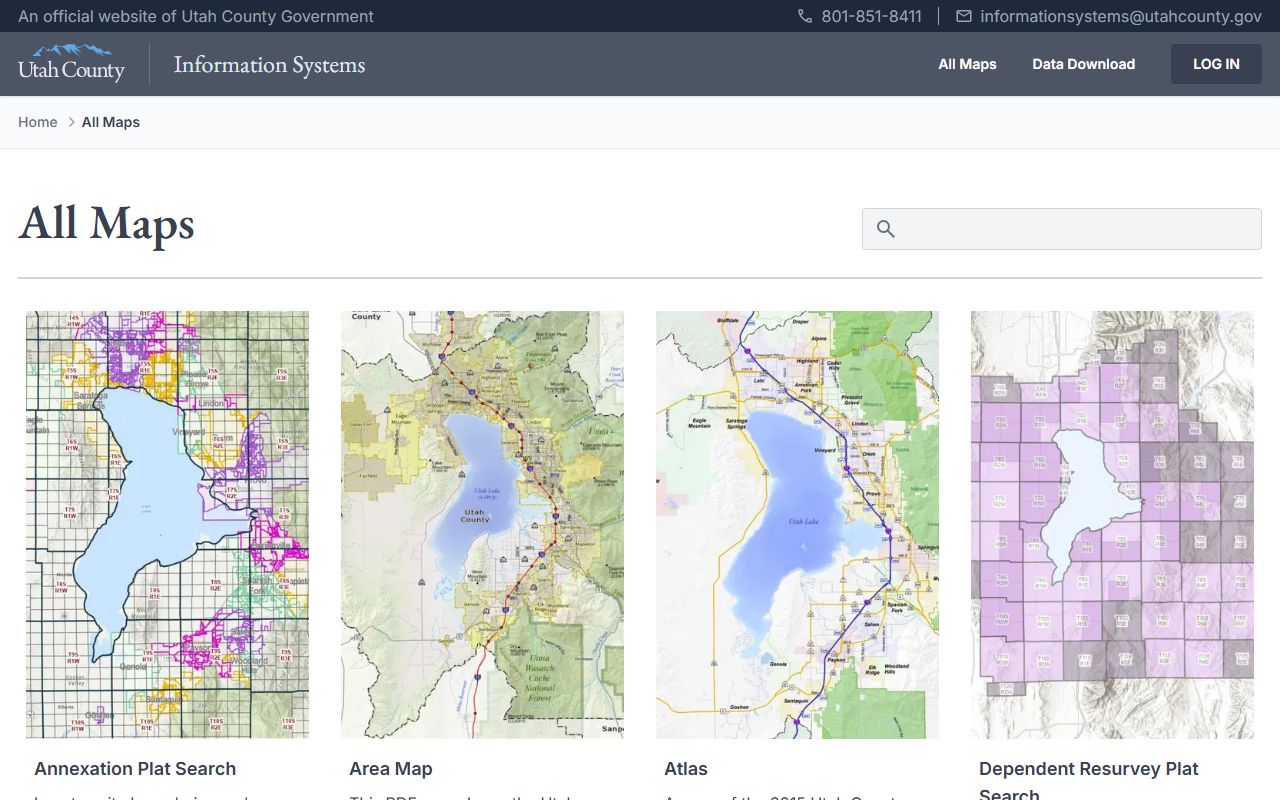
The Utah County GIS Maps portal is especially useful for Eagle Mountain, where many parcels are in newer subdivisions with similar addresses. The map view lets you confirm which parcel is which by location rather than relying on address strings alone.
Statewide property tax rate comparisons show how Utah County fits relative to other counties in the state.
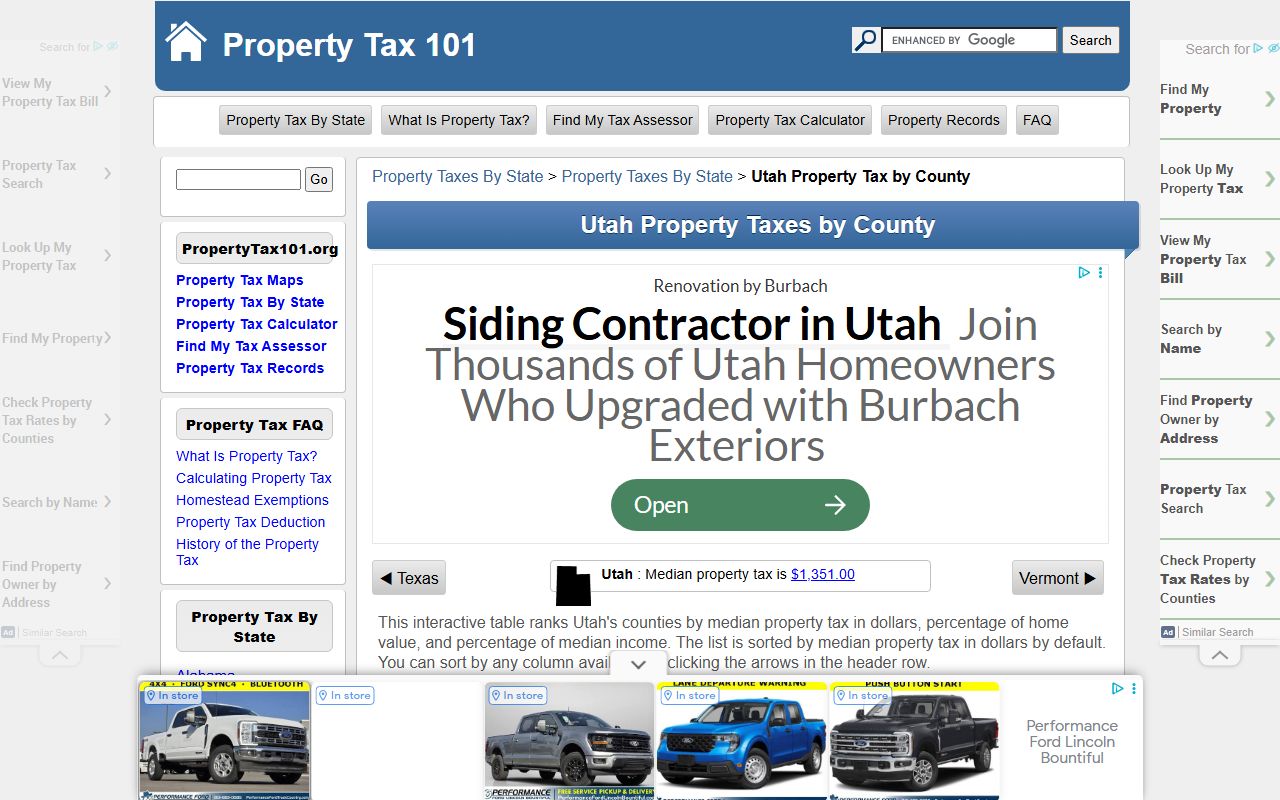
Utah County's 0.55% effective rate is near the state average. You can compare it to other counties using the Utah property tax rates by county reference tool.
The state tax commission site provides overview information on Utah's property tax system, including rules for new construction valuation and exemptions.

The Utah State Tax Commission oversees property tax administration statewide and publishes guidance on assessment rules, exemptions, and the appeals process.
How Eagle Mountain Properties Are Assessed
Under Utah Code Title 59, Chapter 2, all property in Utah must be assessed at 100% of fair market value as of January 1 each year. The Utah County Assessor applies that standard to every Eagle Mountain parcel using the PUMA mass appraisal system.
Eagle Mountain's rapid growth creates an active local real estate market, which gives the assessor strong sales evidence for setting values. When large numbers of new homes in Eagle Mountain are built and sold, those transactions feed into the PUMA models and influence the values assigned to similar nearby properties. In a fast-moving market, assessed values can rise substantially year over year.
New growth is tracked separately on the county's assessment roll. Each year, the Utah County Assessor identifies parcels that were not on the roll the prior year or had new improvements added. Eagle Mountain consistently contributes a significant share of Utah County's new growth additions. If your Eagle Mountain home was completed partway through the year, the assessor may apply a partial-year value for the first tax year and a full value in subsequent years.
The assessor must physically inspect every parcel at least once every five years. Between inspections, PUMA adjusts values based on sales data and market modeling. For Eagle Mountain's newer stock of homes, there is often a lot of recent sales data available, which makes the assessor's models more precise for this area than in rural parts of the county.
Primary Residence Exemption and Eagle Mountain Taxes
Utah's 45% primary residence exemption reduces the taxable value of owner-occupied Eagle Mountain homes to 55% of full assessed market value. The exemption is automatic for homes where the owner lives on site and does not apply to rentals, commercial properties, or vacant lots. Those categories are taxed on 100% of assessed value.
To confirm the exemption is applied to your Eagle Mountain parcel, look up the record in the Utah County Assessor portal. If you recently purchased a home in Eagle Mountain or converted a rental to owner-occupied, verify that the assessor's records reflect the current use. New homeowners in Eagle Mountain's many recent subdivisions should check this during their first year of ownership.
Utah County's effective rate is 0.55%, with a median annual tax of $1,287 based on a median home value of $233,800. Eagle Mountain's newer homes often reflect current market prices, which can exceed that county median. Your total Eagle Mountain bill includes levies from Utah County, Eagle Mountain City, the Alpine School District, and any applicable special service districts.
Note: Eagle Mountain City has grown quickly and adds new taxing districts and service areas regularly. Check the Utah County Assessor record for your specific parcel to see which special service districts apply to your address.
Building Permits and New Construction in Eagle Mountain
Eagle Mountain city handles its own building permits and development approvals through the Eagle Mountain development department. When a permit is issued and work is completed, Eagle Mountain city reports the new construction or improvement to the Utah County Assessor.
The assessor uses permit data to track new growth and identify parcels where improvements may have changed the value. For Eagle Mountain, this is an active process given the volume of new homes being built. If you built a new home or added a significant improvement, expect the assessor to update your parcel record after the permit closes.
In subdivisions that are still under construction, parcel values can change significantly from year to year as lots go from vacant to improved. Check the assessor's records after each tax year to make sure your Eagle Mountain parcel is valued correctly for its current state.
Appealing an Eagle Mountain Property Assessment
Eagle Mountain property owners who disagree with their Utah County assessed value can appeal to the Utah County Board of Equalization. The deadline to file is shown on your annual assessment notice, typically a few weeks after the notice is mailed. You must file within that window.
For Eagle Mountain, comparable sales from similar newer homes in the same or nearby subdivisions make strong appeal evidence. A licensed appraisal is also accepted. Data errors in the county's record, like wrong square footage or incorrect number of bathrooms, are solid grounds for appeal and are often corrected without a formal hearing.
If the Board of Equalization does not rule in your favor, you can escalate to the Utah State Tax Commission Property Tax Division. The Commission provides a formal appeal process and can order Utah County to revise your Eagle Mountain assessment. Reach out to the Utah County Assessor early in the process to get copies of the evidence used to value your parcel.
Utah County Property Tax Records
Eagle Mountain is part of Utah County. Every property assessment, deed record, and tax payment for Eagle Mountain parcels runs through Utah County offices. Visit the Utah County property tax records page for full county-level details, office contacts, and additional resources.
Nearby Cities
These cities near Eagle Mountain are also in Utah County. Their property tax records are handled by the same county offices, and the search tools described on this page apply to all of them.