
Riverton Property Tax Records
Riverton property tax records are held by Salt Lake County, not the city of Riverton. The Salt Lake County Assessor values all residential and commercial parcels within Riverton city limits, and the Salt Lake County Treasurer handles billing and collection. Riverton has seen strong residential growth over the past two decades, and the county's parcel database reflects that expansion. This page explains where to search Riverton property tax records, how the assessment process works for local homeowners, what exemptions apply, and how to appeal if you think your value is wrong.
Riverton Quick Facts
Salt Lake County Assessor for Riverton Parcels
The Salt Lake County Assessor is the office that handles all Riverton property tax records. The assessor's office is at 2001 S State St, Salt Lake City, UT 84114, and can be reached at 385-468-8000. You can search Riverton parcels online by street address or parcel number to get current assessed values, ownership records, property classification, and exemption status.
Salt Lake County provides a dedicated parcel viewer tool that goes beyond a basic text search. The viewer shows parcel boundaries, neighboring lots, aerial photos, and attribute data all in one place. It is useful for Riverton homeowners who want to see how their lot fits into the surrounding area or compare their parcel to adjacent properties. You can access it at the Salt Lake County Parcel Viewer.
The Salt Lake County Assessor is the starting point for any Riverton property tax records search. The office values over 350,000 parcels across the county each year, using sales data and field inspections to keep assessed values in line with the market.
Note: The assessor is required by Utah law to inspect each parcel at least once every five years. Between inspections, values are updated using statistical models based on comparable sales.
Searching Riverton Records Through the Parcel Viewer
The county's online parcel viewer is one of the best tools for Riverton property tax record research. You can find your parcel's serial number, which is the unique ID used across all Salt Lake County systems. Once you have that number, you can use it in the assessor's database, the treasurer's payment system, and the recorder's document search.
The Salt Lake County property information portal connects all three offices in one place. You can go from assessed value to tax bill to deed records without needing separate logins or account numbers. Riverton is a large and active real estate market, so the portal tends to have recent transaction data available fairly quickly after a sale closes.
For deed and title documents tied to Riverton properties, use the Salt Lake County Recorder. The recorder's office holds warranty deeds, quitclaim deeds, trust deeds, liens, and easements. These records are part of the chain of title for every Riverton parcel and can affect the tax record in some circumstances, such as when a property changes hands mid-year.
The official source for Riverton parcel data is the assessor's system. Screenshots below show the main access points.
The Riverton City official website serves as a starting point for city services, and it links to the county offices that maintain actual property records.
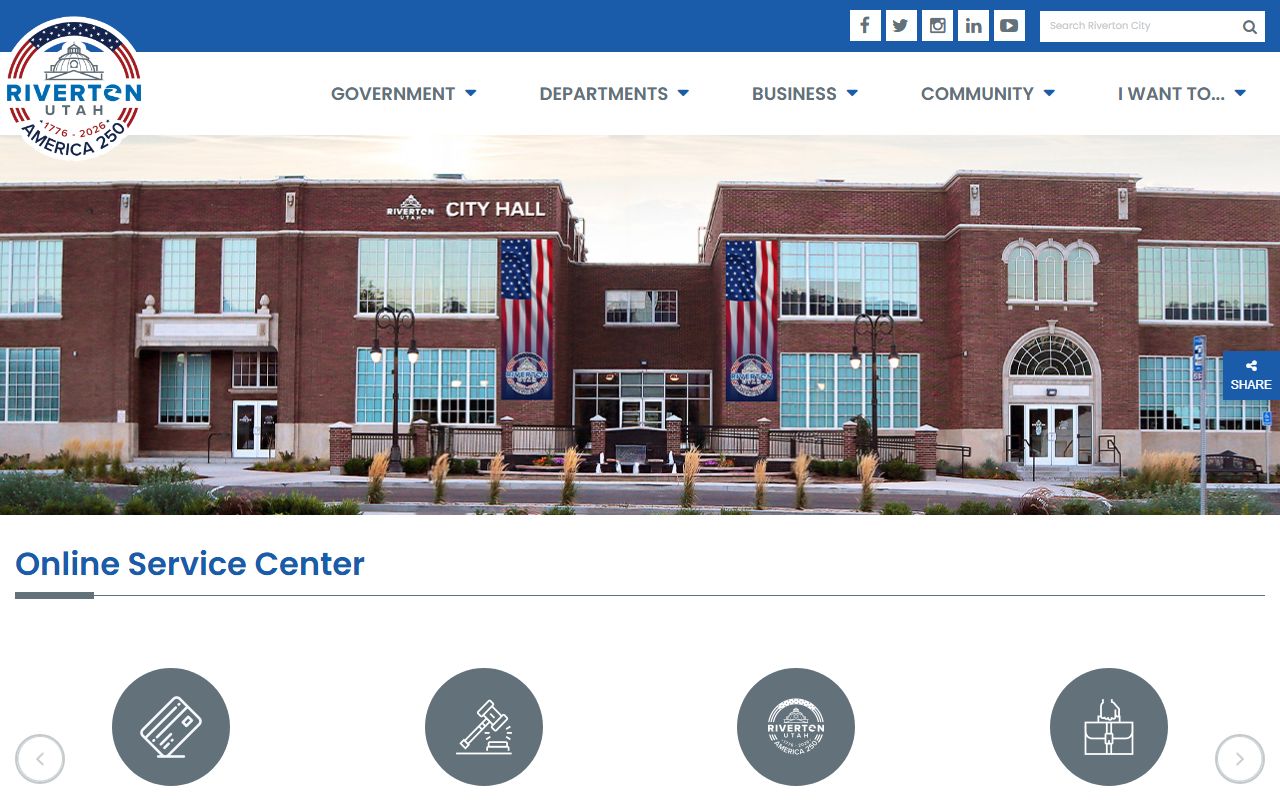
Riverton City's website provides links to Salt Lake County property tax resources along with permit information and city contact details for residents who need to reach local departments.
The Salt Lake County Assessor portal is the primary online source for Riverton assessed value lookups and parcel data.
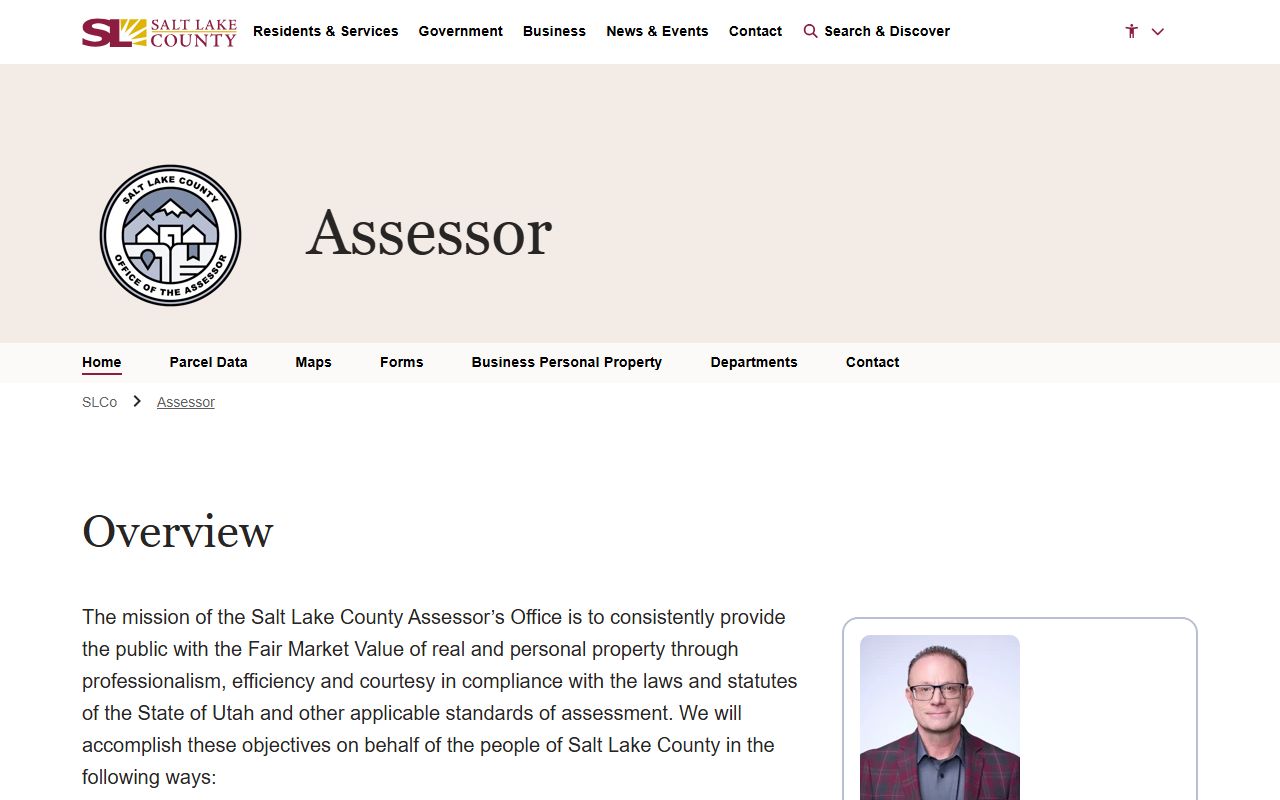
The assessor's search tool covers all of Salt Lake County, including Riverton. Enter a street address or parcel serial number to pull up current values, exemption status, and property classification details.
For a map-based view of Riverton parcels, the county's parcel viewer tool shows boundary lines and parcel attributes alongside aerial imagery.
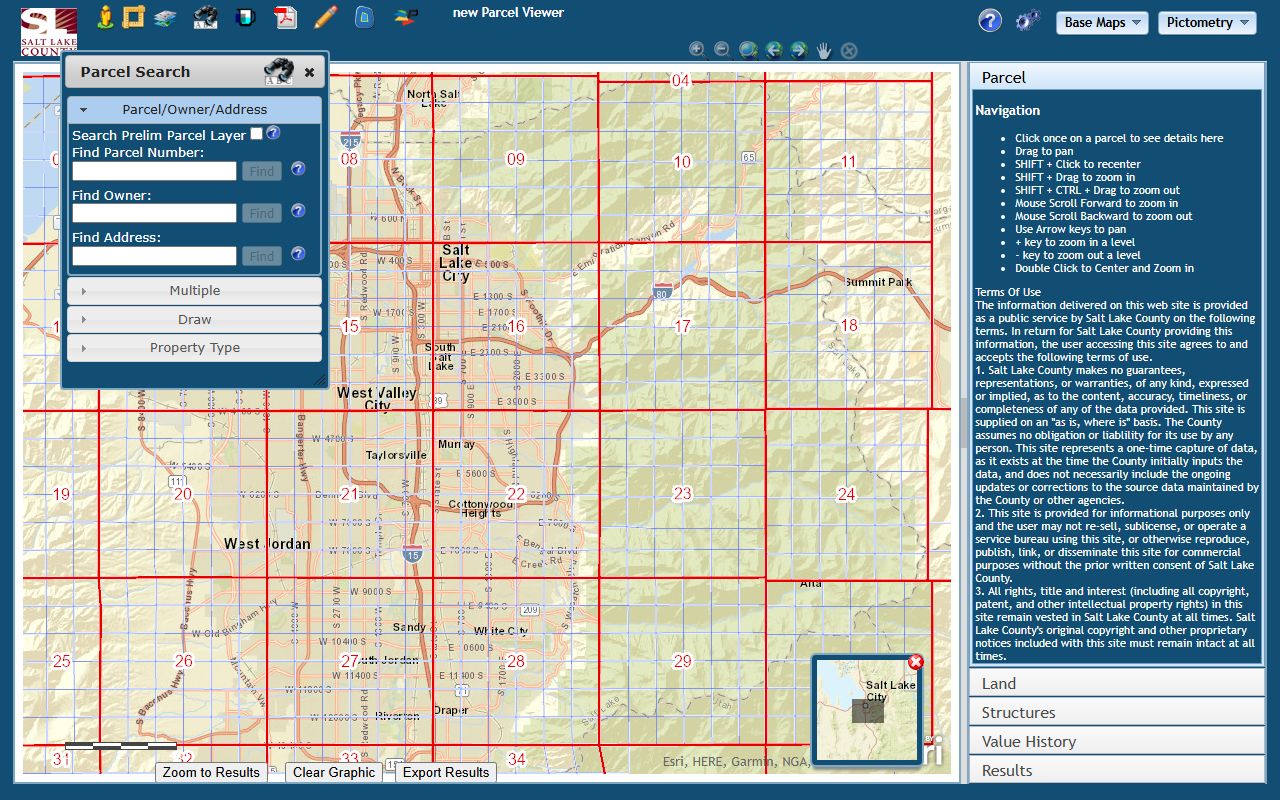
The parcel viewer at the Salt Lake County Parcel Viewer is especially useful for Riverton's newer subdivisions, where many parcels were created in recent years and standard address lookups sometimes return incomplete results.
How Riverton Properties Are Assessed
Under Utah Code Title 59, Chapter 2, all real property must be assessed at 100% of fair market value as of January 1 each year. The Salt Lake County Assessor applies this rule to every Riverton parcel. Market value is determined by analyzing recent sales of comparable homes and adjusting for differences in size, condition, location, and features.
Riverton is one of the faster-growing communities in Salt Lake County. When large numbers of new homes are built and sold within Riverton, those transactions feed directly into the assessor's valuation models. Strong demand in Riverton's housing market means values can move up year over year, and your assessment notice may reflect those increases each time it arrives.
New construction in Riverton is tracked through the new growth portion of the tax roll. When a Riverton home is completed and receives a certificate of occupancy, the assessor adds it to the roll and determines its value. Partial-year assessments apply to homes completed mid-year. If you built a new home in Riverton, check the assessor's records after the first full tax year to confirm the value is entered correctly.
The Salt Lake County Assessor's mass appraisal system uses recent sales as the primary benchmark. In a fast-moving market like Riverton, values from a year or two ago can differ substantially from current prices. Staying aware of what similar Riverton homes are selling for helps you gauge whether your assessment is in the right range.
Primary Residence Exemption and Riverton Tax Bills
Utah gives owner-occupied homes a 45% primary residence exemption. This means the taxable value of a qualifying Riverton home is only 55% of its full assessed market value. The exemption applies automatically when the property is the owner's primary residence. It does not apply to rental homes, vacant lots, or commercial buildings.
To check whether your Riverton home has the exemption applied, look up your parcel in the Salt Lake County Assessor database. The exemption status shows in the property record. If you recently moved into a home or changed its use from rental to owner-occupied, you may need to contact the assessor to update the record.
Salt Lake County's effective property tax rate is 0.67%, with a median annual tax bill of $1,588. Riverton homes often sell above the county median, so many Riverton property owners pay above that figure. Your total tax bill combines levies from Salt Lake County, Riverton City, the Jordan School District, and any applicable special service districts. Each district sets its rate independently through Utah's certified rate process.
Note: If your Riverton property changed from owner-occupied to rental, notify the assessor so the exemption can be removed. Applying the exemption to a non-qualifying property can result in back taxes and penalties.
Riverton Development Permits and Property Assessment
Riverton City handles its own building permits and zoning decisions through the Riverton Development Services department. When you pull a permit for a major addition, a new structure, or a significant renovation in Riverton, the city reports that work to the Salt Lake County Assessor.
The assessor uses permit data to identify properties where improvements may have increased value. A finished basement, an added garage, or a new accessory dwelling unit can all affect your Riverton property tax record. The assessor will typically schedule an inspection after a permit is closed to review the improvement and update the assessed value if warranted.
Minor repairs and cosmetic work generally do not trigger reassessment. But any permitted work that adds square footage, adds a structure, or substantially changes the property should be expected to affect the tax record. Check the assessor's database a year or two after major work is completed to see if the value was updated.
Paying and Appealing Riverton Property Taxes
Property tax bills for Riverton parcels are issued by the Salt Lake County Treasurer. The treasurer mails tax notices each fall, and taxes are due in two installments. Online payment, mail, and in-person options are available. Delinquent taxes in Salt Lake County accrue interest, so it pays to stay on top of due dates.
If you disagree with your Riverton property assessment, file an appeal with the Salt Lake County Board of Equalization. The deadline is shown on your assessment notice and is typically a short window after the notice is mailed. Appeals must include evidence supporting a different value. Comparable sales, a licensed appraisal, or documentation of property defects all work as evidence.
The Board of Equalization reviews your evidence and can lower, raise, or leave the assessed value unchanged. If you are not satisfied with the board's decision, you can take the appeal further to the Utah State Tax Commission Property Tax Division. The Commission handles formal hearings and can order a revised assessment if the evidence supports it.
The Utah State Tax Commission also maintains statewide property tax oversight and publishes information on rates, exemptions, and the appeals process. This resource is useful for Riverton homeowners who want to understand how their taxes compare to other areas of Utah.
Salt Lake County Property Tax Records
Riverton is part of Salt Lake County. Every property tax assessment, payment record, and appeal for Riverton parcels runs through county offices. Visit the Salt Lake County property tax records page for full county-level details, office contacts, and additional resources.
Nearby Cities
These cities near Riverton are also in Salt Lake County. Each city's property tax records are managed by the same county offices, so the search tools and processes described on this page apply across all of them.