
West Jordan Property Tax Records
West Jordan property tax records are managed by Salt Lake County and cover all residential, commercial, and industrial parcels in this fast-growing Salt Lake County city. Property owners can look up assessed values, check tax payment status, and research ownership history online through the county assessor and treasurer. This guide covers how to find West Jordan property tax records, what they contain, and how the appeal process works for owners who disagree with their assessed value.
West Jordan Quick Facts
West Jordan Property Tax Records and Salt Lake County
West Jordan sits in Salt Lake County, and all property tax functions are handled at the county level. The Salt Lake County Assessor values every parcel in West Jordan at 100% of fair market value as of January 1 each year. This applies to residential homes, commercial buildings, vacant land, and personal property used in business. The legal basis for this valuation standard comes from Utah Code Title 59, Chapter 2, which governs all property taxation in the state. West Jordan's roughly 3,000 licensed businesses mean the county handles a mix of both residential and commercial property records for this city.
You can pull up any West Jordan property record through the county assessor's website at saltlakecounty.gov/assessor. A search by address gives you the owner name, parcel number, legal description, land value, improvement value, total market value, and taxable value after any applicable exemptions. Commercial properties in West Jordan do not receive the primary residence exemption that homeowners get, so their full market value is taxable. If your business property seems overvalued, the county assessor's office is the place to start.
The West Jordan city website at westjordan.utah.gov connects residents to city services, permit records, and development information that overlaps with property tax data.
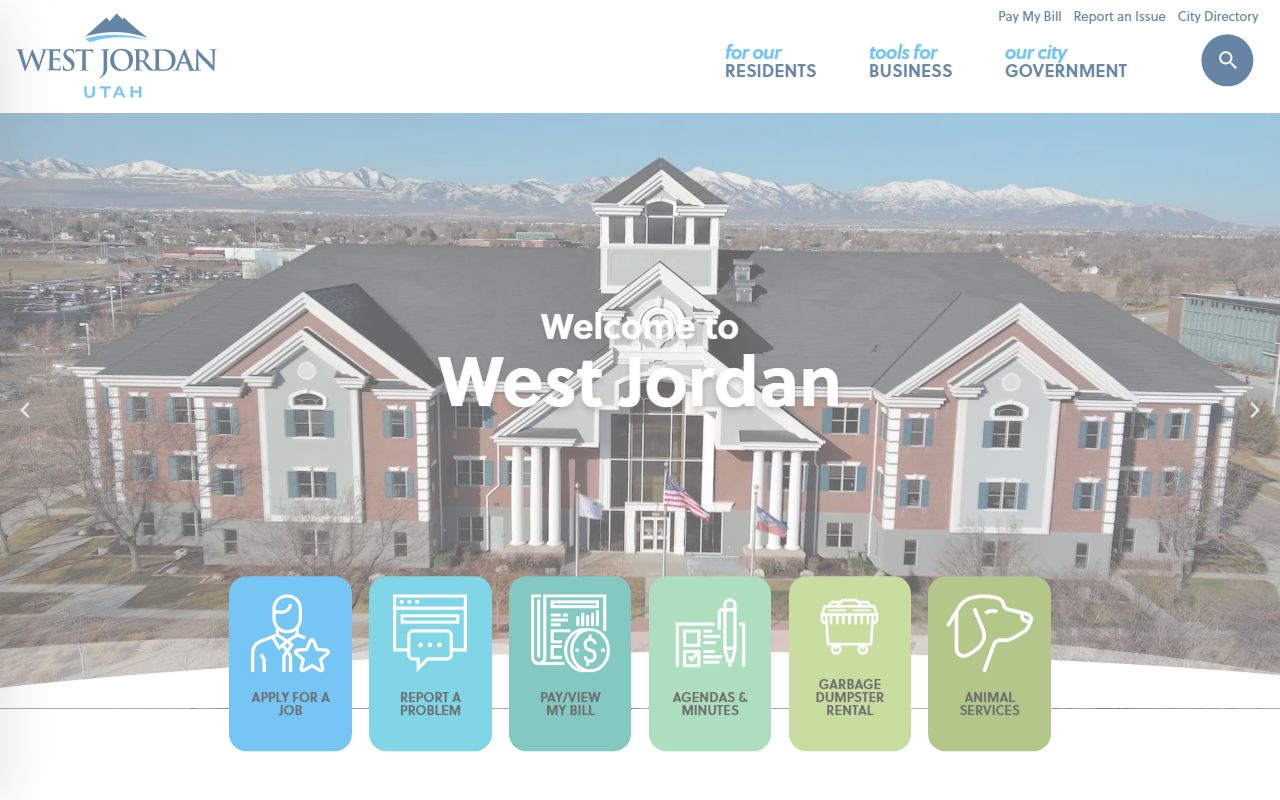
The West Jordan city portal helps property owners navigate between city-level permits and zoning records and the county-level tax data that determines annual bills.
Searching West Jordan Property Tax Records Online
West Jordan property information is available through the Salt Lake County parcel viewer, which is the best free tool for researching any address in the city. Go to the assessor portal at saltlakecounty.gov/assessor and enter the street address or parcel number. Results show current ownership, assessment year data, building characteristics, and whether any exemptions are on file. You can also see prior-year values to track how your West Jordan property has been trending.
West Jordan also maintains a property information page at westjordan.utah.gov/property that points residents toward the appropriate county and city resources. If you need deed copies, mortgage documents, or recorded liens on a West Jordan property, the Salt Lake County Recorder at saltlakecounty.gov/recorder holds those records. Copy fees at the recorder are $2 per page. Recorded documents show the full chain of title and any encumbrances on the property.
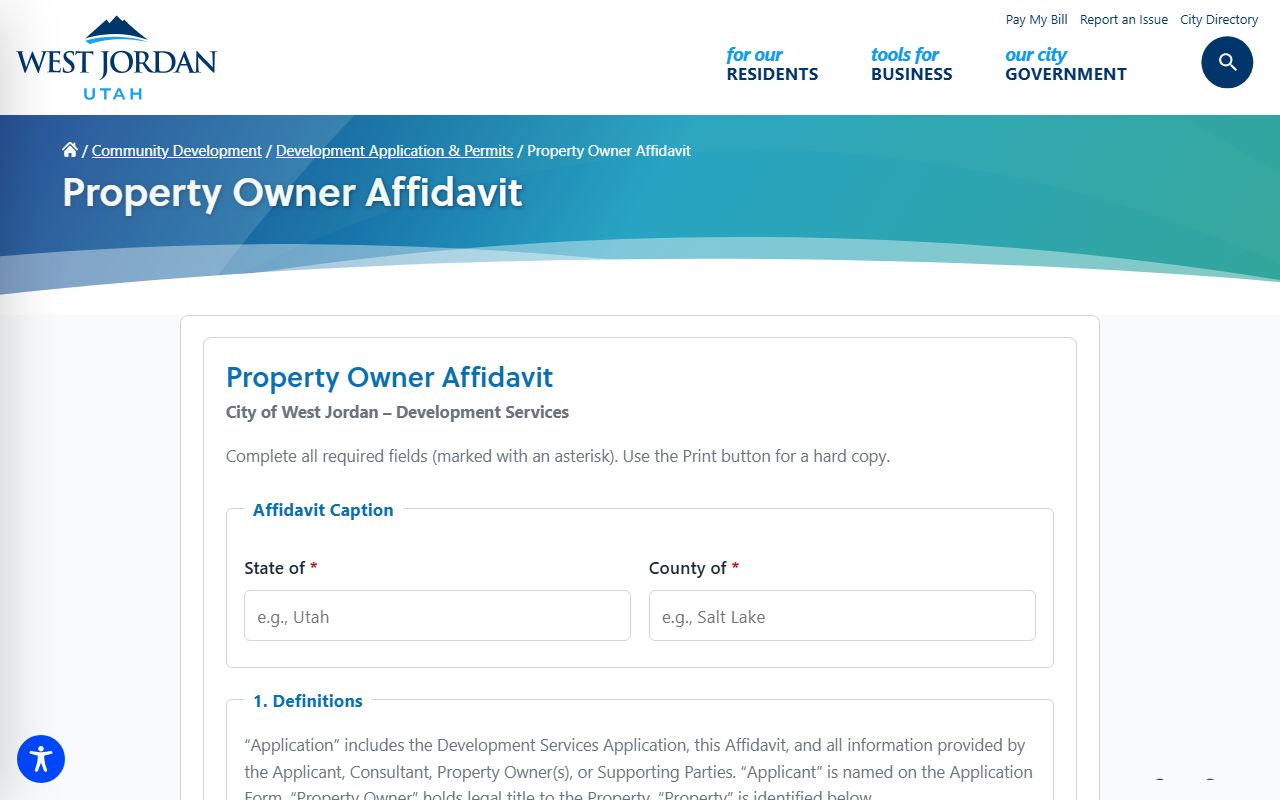
Using the West Jordan property information page alongside the county assessor's portal gives you a complete view of both city-level data and the county tax records tied to any address.
West Jordan Development Records and Property Taxes
West Jordan's Development Services Department at westjordan.utah.gov/development handles building permits, zoning, code enforcement, and site plans. These records connect directly to property tax assessments. When a new home is built in West Jordan or an existing structure is expanded, the permit data flows to Salt Lake County and triggers an assessment update. The county assessor inspects every property in its jurisdiction at least once every five years as required by state law, and permit records help them stay current between inspections.
West Jordan's GIS mapping tools show parcel boundaries, zoning districts, floodplain areas, and utility easements. If you are evaluating a West Jordan property for purchase or development, the city's zoning data combined with the county's assessment records tells you a lot about what the land is worth and how it is classified for tax purposes. Zoning changes can affect assessed value, especially when land moves from agricultural to residential or commercial designation.
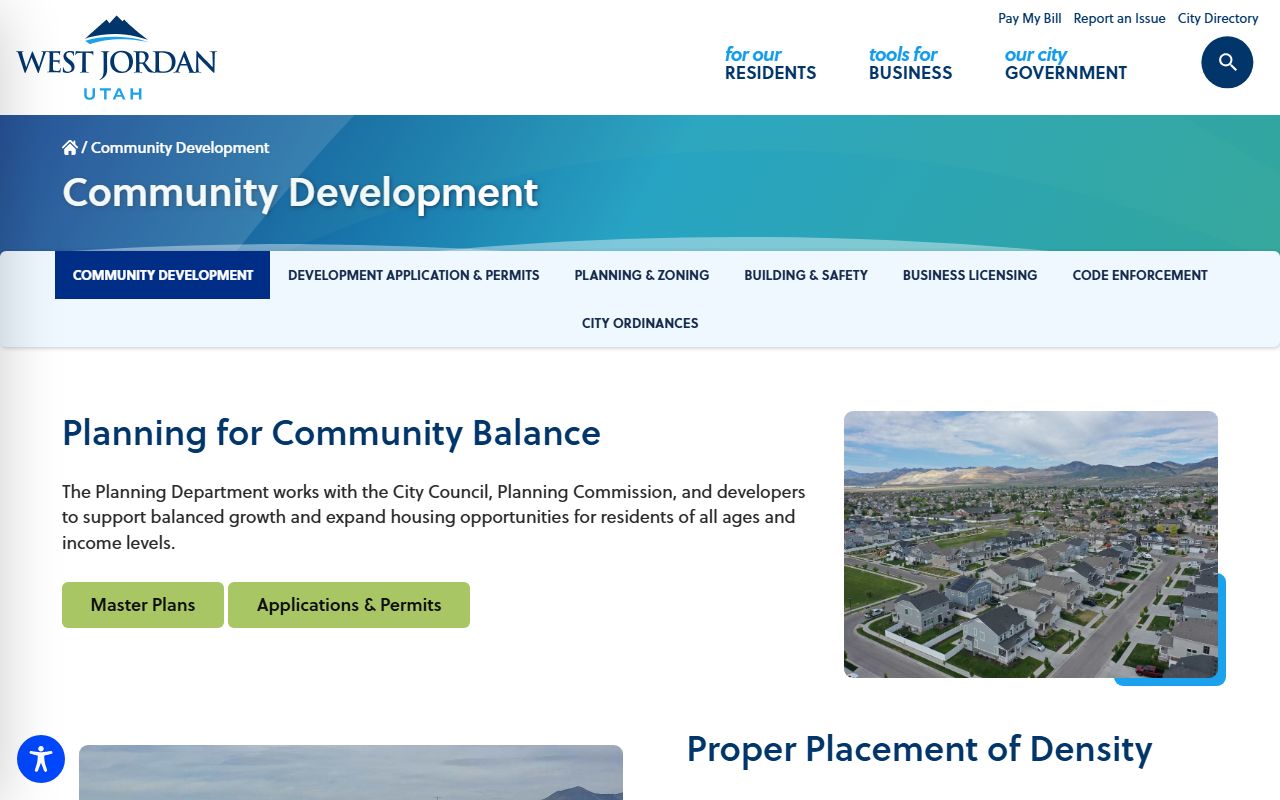
West Jordan's development records are maintained separately from county tax records but are closely related, and both are worth reviewing when researching any property in the city.
Exemptions and Tax Relief for West Jordan Property Owners
West Jordan homeowners who occupy their residence as their primary home receive a 45% exemption on assessed value under Utah Code Title 59, Chapter 2. This means the taxable base is only 55% of market value. For a West Jordan home assessed at $400,000, only $220,000 is subject to tax. The Salt Lake County Assessor applies this exemption automatically for owner-occupied homes, but it is worth checking your assessment notice to confirm it has been applied correctly.
Other exemptions include reduced valuations for agricultural land, exemptions for religious and charitable organizations, and the circuit breaker program for low-income elderly and disabled homeowners. These programs are administered by the Utah State Tax Commission Property Tax Division at 210 N 1950 W, Salt Lake City, 801-297-2200. Applications for the circuit breaker program must be filed annually and deadlines are set each year. West Jordan residents with questions about qualifying should call the commission or visit the county assessor.
How to Appeal a West Jordan Property Assessment
If you believe your West Jordan property is assessed at more than its fair market value, you have the right to appeal. The process starts with the Salt Lake County Board of Equalization. You must file an appeal during the appeal window that opens after assessment notices are mailed. Missing the deadline closes the door for that year, so act quickly when you receive your notice.
The strongest appeals come with evidence. Sales of similar West Jordan homes near the January 1 assessment date are the most direct comparison. If you can show that comparable properties sold for less than your assessed value, the board will consider that. You can also submit a licensed appraisal or point out factual errors in the assessor's property data, like incorrect square footage or a wrong year built. If the Board of Equalization does not rule in your favor, you can appeal to the Utah State Tax Commission as a next step.
Note: Filing an appeal does not delay your tax payment obligation. Pay what is billed on time to avoid penalties, even while an appeal is pending in West Jordan.
How Property Tax Rates Are Set in West Jordan
West Jordan does not set property tax rates on its own. Utah's Truth in Taxation system governs how rates are calculated for every taxing entity in the state. Each entity, including the city, the county, the school district, and any special service districts covering a West Jordan address, sets a budget. The total revenue needed is divided by the total taxable value of all parcels to produce a certified rate. If assessed values rise across West Jordan, the certified rate typically stays flat or drops so total revenue stays the same. Entities that want to collect more than the certified rate would bring in must hold a public hearing with proper notice under Utah Code Title 59, Chapter 2.
This process means that rapid growth in West Jordan, which has been one of the fastest-growing parts of Salt Lake County, generally does not cause automatic tax increases for existing property owners. New development adds taxable value without requiring a rate increase. West Jordan residents can attend Truth in Taxation hearings to comment on proposed rate changes when taxing entities seek to raise revenues beyond the standard certified rate.
Salt Lake County Property Tax Records
Salt Lake County is the governing authority for all property tax functions in West Jordan, handling assessment, billing, and collection for every parcel in the city.
Nearby Utah Cities
West Jordan borders several other Salt Lake County cities whose property tax records are also managed by Salt Lake County offices.