
South Jordan Property Tax Records
South Jordan property tax records are managed by Salt Lake County. The Salt Lake County Assessor values all parcels in South Jordan, and the Salt Lake County Treasurer handles billing and collection. South Jordan is one of the fastest-growing cities in Utah, and the county's property records reflect that growth. This page shows you where to search South Jordan property tax records, how assessment works, and what tools are available to local property owners.
South Jordan Quick Facts
How South Jordan Properties Are Assessed
All property in South Jordan is assessed by the Salt Lake County Assessor. Utah law under Utah Code Title 59, Chapter 2 requires that every parcel be valued at 100% of fair market value as of January 1 each year. That assessed market value is the foundation for every South Jordan property tax bill.
For owner-occupied homes in South Jordan, Utah's 45% primary residence exemption reduces the taxable portion to just 55% of market value. This exemption applies automatically to homes where the owner lives on the property. It does not apply to rental properties, vacant land, or commercial parcels. Those categories pay tax on 100% of assessed value. In South Jordan, where new residential development has been rapid, many parcels are in newer subdivisions where values can be higher than county averages.
The Salt Lake County Assessor's Office is required by state law to physically inspect every parcel at least once every five years. Between full inspections, the assessor adjusts values based on sales data and market activity across South Jordan and the rest of Salt Lake County. When large numbers of new homes are built and sold in South Jordan, those transactions feed directly into the assessor's value models for similar nearby properties.
South Jordan's growth creates an active real estate market, which means the assessor has substantial sales evidence to work with. Fast appreciation in South Jordan can push assessed values up year over year, making it worth reviewing your assessment notice each time it arrives.
Find South Jordan Property Tax Records Online
The Salt Lake County Assessor holds the parcel database for South Jordan. You can search by street address or parcel number to pull up current assessed values, property class, ownership name, legal description, and exemption status. This is the main portal for South Jordan property tax record searches.
For payment records and billing information, use the Salt Lake County Treasurer. Once you have a parcel number from the assessor's database, the treasurer's system shows whether taxes are current, the amount due, and any delinquency history. You can also pay South Jordan property taxes online through the treasurer's portal.
The South Jordan City website links to county tax resources and provides information on city services that interact with property records. The city's South Jordan Building Department issues permits for new construction, additions, and major renovations. These permits are reported to the county assessor and can trigger a reassessment of your South Jordan property tax record when improvements are completed.
South Jordan City and County Tax Tools
The South Jordan City official website provides residents with access to permit history, city services, and links to Salt Lake County property records for South Jordan parcels.
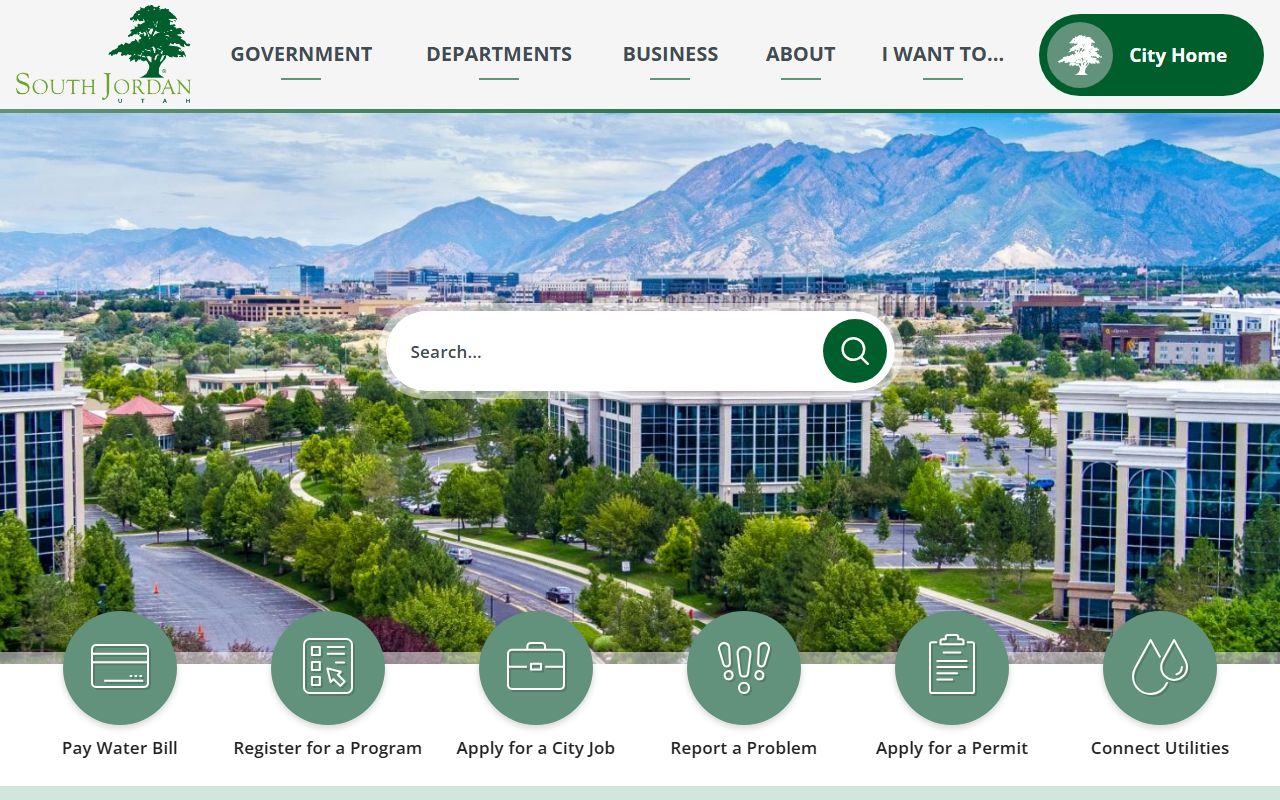
South Jordan City routes residents to the Salt Lake County Assessor portal for parcel searches and to the Treasurer for tax payment lookup. Both county offices maintain online tools that are accessible directly from South Jordan addresses.
The Salt Lake County Assessor portal covers all of South Jordan and is the most direct way to search property tax records for any South Jordan parcel by address or parcel ID.
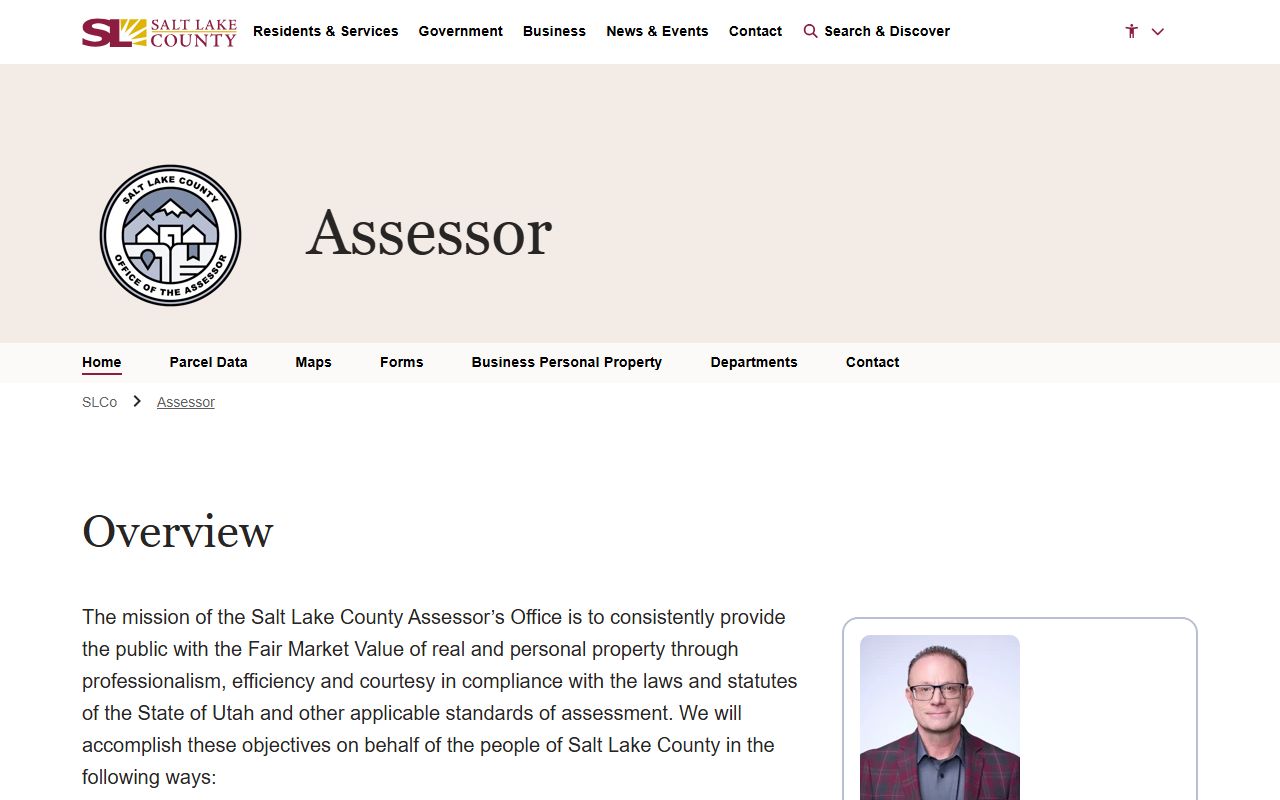
Salt Lake County assessor records for South Jordan include valuation history, recent sales comparisons, and exemption status. Reviewing the full record can help you understand your current tax bill or prepare an appeal if you believe your South Jordan property is overvalued.
Calculating South Jordan Property Taxes
South Jordan property taxes follow the same calculation process used across Salt Lake County. The assessor sets market value. The primary residence exemption reduces taxable value to 55% for qualifying homeowners. Then the combined levy rate from all overlapping taxing districts is applied to get the final tax bill.
South Jordan sits within several taxing districts at once. Your bill includes a Salt Lake County levy, a South Jordan City levy, a school district levy, and potentially levies from special service districts covering fire protection, roads, and utilities. Each district sets its own rate through the state's certified rate process, which requires public notice and hearings if a district wants to increase revenue beyond the prior year's collections.
Salt Lake County's effective rate is 0.67%, with a median annual tax of $1,588. For a newer home in South Jordan with a higher market value than the county median, the tax bill may be above that figure. Fast-growing cities like South Jordan tend to have a mix of newer higher-value homes and older properties, so individual bills vary widely depending on when the home was built and its current market value. Using the Salt Lake County Assessor's online tool to look up your South Jordan parcel gives you the exact numbers for your property.
Note: South Jordan's rapid development means new parcels are added to the tax roll regularly. If you purchased in a new subdivision, make sure your parcel is properly enrolled with the assessor to avoid missed bills.
Disputing a South Jordan Property Assessment
South Jordan property owners who disagree with their assessed value can appeal to the Salt Lake County Board of Equalization. You must file your appeal within the window shown on your assessment notice, which is typically a few weeks after the notice is mailed. Missing that deadline means waiting until the next tax year to challenge the value.
A strong appeal for a South Jordan property includes evidence that the county's value does not match the market. Bring recent sales data from comparable South Jordan properties, a current appraisal, or documentation of physical problems that reduce value. Errors in the assessor's records, such as incorrect square footage or wrong property class, are also grounds for an appeal and are often easier to prove than market value disputes.
If the Board of Equalization does not rule in your favor, you can escalate to the Utah State Tax Commission. The Commission provides a formal appeal process and can order the county to revise your South Jordan assessment if the evidence supports a lower value. Contact the Salt Lake County Assessor early in the process to get copies of the data used to value your South Jordan property.
Salt Lake County Property Tax Records
South Jordan is part of Salt Lake County. Every property tax assessment, payment, and appeal for South Jordan parcels runs through the county. Visit the Salt Lake County property tax records page for full details on county-level resources, rates, and exemptions.
Nearby Utah Cities
These cities near South Jordan are also in Salt Lake County or neighboring areas. Each has its own property tax records managed at the county level.