
Beaver County Property Tax Records
Beaver County property tax records are public documents maintained by the county Assessor, Recorder, and Treasurer offices located in Beaver, Utah. If you need to find assessed values, ownership history, or tax payment status for any parcel in Beaver County, these offices hold the data you are looking for. The Assessor sets values each year, the Recorder keeps title documents, and the Treasurer handles all tax billing and collection. You can search Beaver County property tax records in person or through the county website at beaver.utah.gov.
Beaver County Quick Facts
Beaver County Assessor Office
The Beaver County Assessor's Office is the starting point for most property tax record searches. The Assessor values all taxable real property in Beaver County each year. Under Utah Code Title 59 Chapter 2, all taxable property must be assessed at 100% of fair market value. The assessment date is January 1. That means the value on your tax notice reflects what your property was worth at the start of the year, not the middle or end.
Fair market value, as defined in Sec. 59-2-103 of the Utah Code, means the price a willing buyer would pay a willing seller when neither is under pressure to act. The Assessor uses comparable sales data, cost data, and income data as needed to reach that figure. Property characteristics on file include land area, building square footage, construction type, and the year it was built. You can contact the Assessor to review these records and ask about corrections if the data looks wrong. Owners who believe their value is too high can file an appeal with the Beaver County Board of Equalization.
The Assessor's Office is located at the Beaver County Courthouse in Beaver, Utah. You can reach them online at beaver.utah.gov/assessor.
The Beaver County main website is where you can find links to all county offices and service information for property owners.
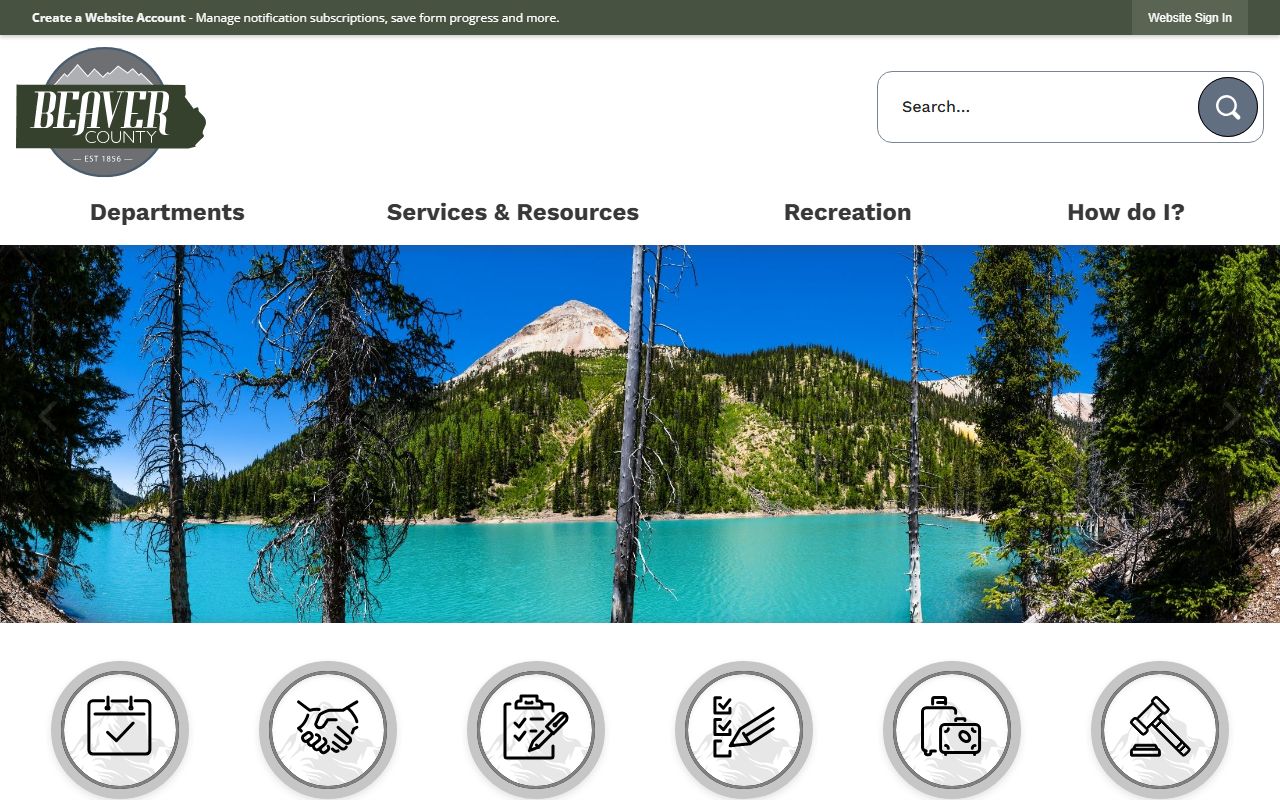
The Beaver County website provides access to property records, online account management, and links to each county department that handles property tax matters.
| Office | Beaver County Assessor |
|---|---|
| Location | Beaver County Courthouse, Beaver, Utah |
| Website | beaver.utah.gov/assessor |
Property Tax Records in Beaver County
Property tax records in Beaver County cover a wide range of information. At the core is the assessment roll, which lists every taxable parcel, its owner of record, and its assessed value as of January 1. These records are public. Anyone can look up a parcel and see the owner name, legal description, and tax value. The Assessor keeps records of property characteristics such as lot size, building data, and land use type. These details drive the valuation.
The Recorder's Office holds the other half of the property record picture. Deeds, mortgages, liens, and easements are all filed there. When a property sells or a lien is placed on it, the document goes to the Recorder. The Recorder then works with the Assessor to update ownership data for the tax roll. If you are researching who owns a parcel or whether it has outstanding liens, the Recorder is the right office to contact. You can visit the Recorder at beaver.utah.gov/recorder.
The Treasurer handles tax billing and collection. Tax notices go out each year, typically in November. If you need to see whether taxes on a Beaver County property are current or delinquent, contact the Treasurer at beaver.utah.gov/treasurer.
The Recorder's office page shows the types of documents it maintains and how to access them for your property research in Beaver County.
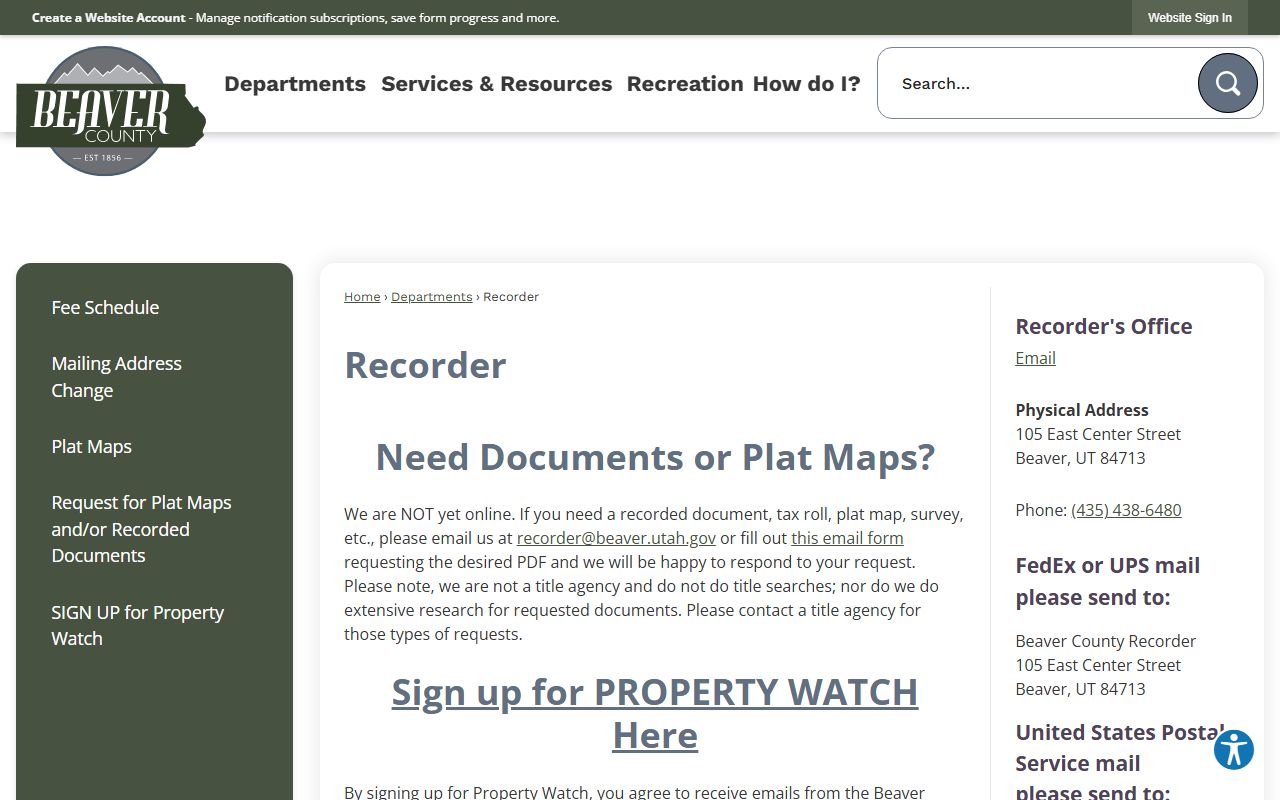
The Beaver County Recorder records and indexes all documents that affect real property title, which are essential for complete property tax record research.
How Property Tax Is Calculated in Beaver County
The calculation for Beaver County property taxes follows the same three-step process used across all 29 Utah counties. First, the Assessor sets the market value of your property as of January 1. Second, that value is multiplied by the assessment ratio to get the assessed value. Third, the levy rate from all taxing districts that cover your parcel is applied to find the final bill.
Utah law provides a 45% primary residence exemption under the Utah Code. If your Beaver County home is your primary residence, only 55% of its market value is subject to taxation. That exemption makes a real difference on a median-priced home. With a median home value of $150,200 in Beaver County, the exemption reduces the taxable base significantly. The median annual tax in Beaver County is $688, and the effective rate is 0.46%, which is well below the statewide average.
Multiple taxing entities draw from the same parcel. Your Beaver County tax bill may include levies for the county, school districts, special service districts, and other entities. The total of those levy rates, applied to the taxable assessed value, produces your annual tax amount. Note: Taxing entities that want to raise revenues above the prior year must follow Utah's Truth in Taxation requirements, which include public notice and hearings.
Utah State Tax Commission and Beaver County
The Utah State Tax Commission provides oversight for all county assessors, including the Beaver County Assessor. The Commission ensures that assessors apply uniform standards when valuing property. It publishes annual valuation guides and provides technical assistance to counties. This oversight matters because property owners across the state deserve equal treatment under the law.
Some properties in Beaver County are assessed at the state level rather than the county level. These are called centrally assessed properties and include utilities, railroads, telecommunications companies, and mines that operate across county lines. The centrally assessed property system handles these valuations. Tax revenue from these properties still flows to the counties where the property is located, including Beaver County.
The Property Tax Division of the State Tax Commission provides resources for property owners who need information about their rights, the appeal process, or available exemptions. If a county-level appeal does not resolve a dispute, the State Tax Commission can hear the case at the state level.
The Utah State Tax Commission main portal offers statewide property tax resources and oversight information relevant to Beaver County property owners.
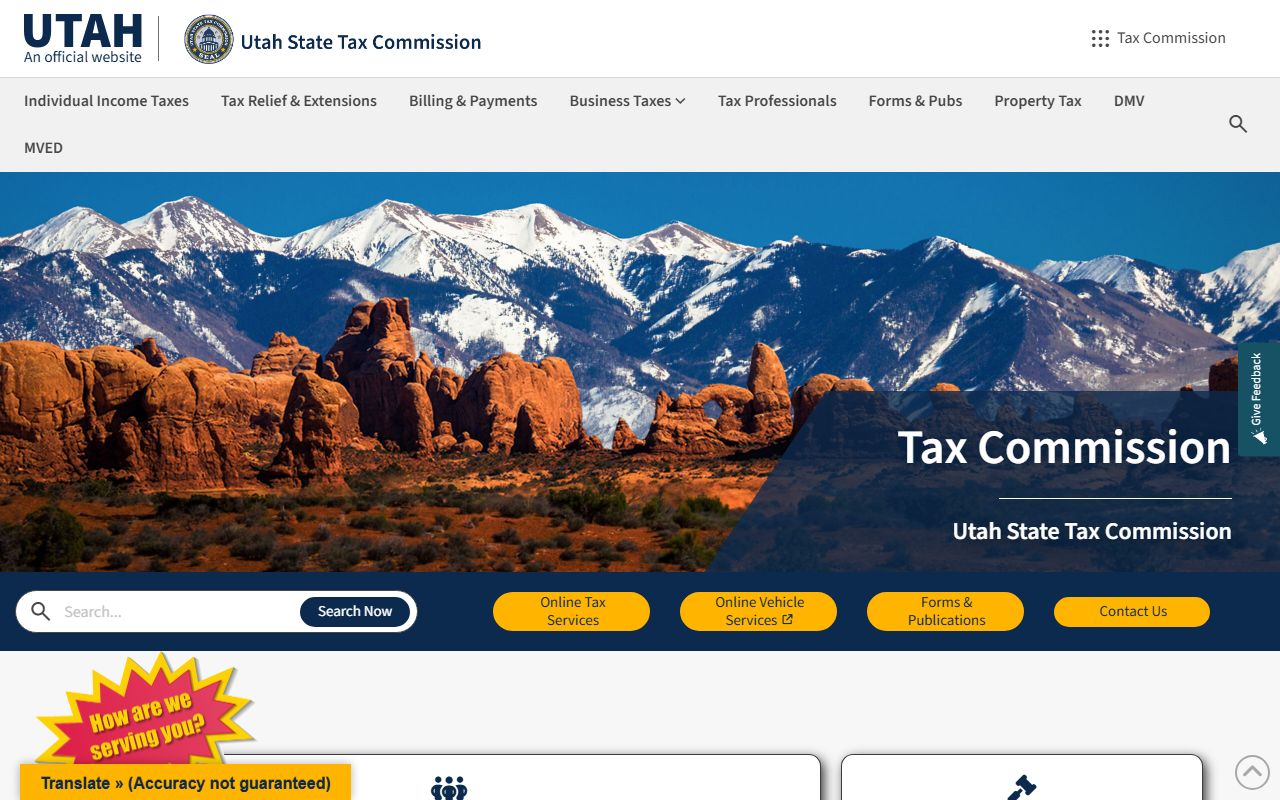
The State Tax Commission website gives property owners direct access to state-level oversight resources that apply to all Beaver County properties.
Appealing Your Beaver County Assessment
If you think the Assessor has overvalued your Beaver County property, you have the right to appeal. The appeal process starts at the county level with the Beaver County Board of Equalization. To file, you submit a written request for review within the deadline set each year. The Board will schedule a hearing where you can present evidence that your property's value should be lower.
Strong appeals are built on evidence. Comparable sales of similar properties in Beaver County that sold for less than your assessed value are effective. You can also use an independent appraisal. The key standard is the fair market value definition in Sec. 59-2-103: what a willing buyer would pay a willing seller with no pressure on either side. If the Assessor's figure does not match that standard, you have grounds to appeal.
If the Board of Equalization does not rule in your favor, you can take the appeal further to the State Tax Commission Property Tax Division. That process is more formal but is available to all Beaver County property owners.
GIS and Parcel Maps for Beaver County
Beaver County GIS data shows parcel boundaries and ownership information on a map. The GIS system is integrated with assessment records so you can view property data visually. You can locate parcels by address or parcel number. The county GIS page at beaver.utah.gov/gis provides access to parcel maps.
For statewide parcel data and geographic information, the Utah GIS Portal provides a comprehensive layer that covers all 29 counties including Beaver County. The portal includes parcel boundaries, ownership data, and various overlay layers. Open data is also available at the state GIS portal for users who need bulk data downloads.
The Utah GIS Portal statewide mapping resource includes Beaver County parcel data alongside all other Utah counties.

The state GIS portal provides interactive mapping tools that let you locate and identify Beaver County parcels using address or geographic search.
Note: Parcel boundary data is updated regularly but may not reflect very recent changes. For official legal descriptions, contact the Beaver County Recorder.
Delinquent Taxes and Tax Sales in Beaver County
When property taxes go unpaid in Beaver County, penalties and interest begin to accrue. The Beaver County Treasurer tracks all delinquent accounts and can tell you whether a parcel has outstanding taxes. Delinquent tax information is part of the public record. Anyone researching a Beaver County property should check tax status before making decisions about that parcel.
Properties with taxes unpaid for multiple years may be subject to tax sale procedures under Utah law. The Utah Code Title 59 Chapter 2 sets out the legal framework for delinquent tax enforcement, including notice requirements and redemption rights. Property owners have the right to pay off delinquent taxes and redeem their property up to the point of sale. Contact the Beaver County Treasurer at beaver.utah.gov/treasurer for current delinquent tax information and payment options.
Cities in Beaver County
Beaver County has several small communities including the county seat of Beaver. No cities in Beaver County meet the population threshold for individual city pages on this site. All property tax records for Beaver County parcels are handled through the county offices in Beaver, Utah.
Nearby Counties
Beaver County borders several other Utah counties. If you are researching property near a county line or need to find records in an adjacent county, the links below will take you directly to those county pages.