
Access Uintah County Property Tax Records
Uintah County property tax records are held by the county Assessor, Recorder, and Treasurer offices in Vernal, the county seat in northeastern Utah. Uintah County is part of the Uinta Basin, a region with significant oil and gas production that affects how some properties are assessed. Whether you need an assessed value, a deed history, a tax balance, or parcel data for any property in Uintah County, this page explains which office to contact and how the county's property tax system works.
Uintah County Quick Facts
Uintah County Assessor and Property Valuation
The Uintah County Assessor determines the value of all locally assessed taxable property in the county. Assessment is as of January 1 each year under Utah state law. Uintah County has a median home value of $183,100 and an effective rate of 0.51%, producing a median annual tax of $940. These numbers are in the moderate range for Utah. The county seat is Vernal, which serves as the commercial center of the Uinta Basin region.
Under Title 59, Chapter 2 of the Utah Code, all property in Utah must be assessed at fair market value. The Uintah County Assessor uses sales comparisons, cost data, and income analysis to arrive at that value for each locally assessed parcel. For primary residences, Utah's 45% exemption reduces the taxable portion of assessed value to 55%. On a home assessed at $183,100, that brings the taxable value to about $100,705. If you own a home in Uintah County and use it as your primary residence, make sure the exemption is on file with the Assessor's office in Vernal.
Agricultural and range land in Uintah County may qualify for the Greenbelt Act, which assesses productive farm and ranch land on its agricultural use value rather than its highest market value. This is an important provision for the many ranchers and landowners in the Uinta Basin whose land has resource value well above typical agricultural use value. Contact the Assessor to confirm whether your property qualifies and what the application process requires.
One important distinction in Uintah County is that oil and gas properties are not assessed by the county Assessor. They are centrally assessed by the Utah State Tax Commission, which is covered in more detail in a section below. For all other locally assessed properties, including homes, commercial buildings, vacant land, and agricultural parcels, the Uintah County Assessor is the office that sets the value.
Note: The Assessor's office in Vernal handles exemption applications, assessment correction requests, and informal valuation reviews for locally assessed property throughout Uintah County.
Uintah County Recorder Property Documents
The Uintah County Recorder maintains all real property documents filed in the county. Deeds, mortgages, oil and gas leases, easements, liens, plats, and other instruments affecting title to property in Uintah County are recorded and indexed here. With Uintah County's energy economy, the Recorder's office handles a significant volume of oil and gas-related instruments in addition to standard residential and commercial property documents.
When a property changes hands in Uintah County, the deed must be recorded with the Recorder's office before the transfer is effective against third parties. This recording requirement applies to all property transfers, whether a simple residential sale, a ranch conveyance, or a mineral rights transfer. The Recorder's index is the official chain of title for all recorded real property instruments in the county.
Oil and gas leases and royalty interests are a distinct category of recorded documents in Uintah County. These instruments affect interests in the subsurface minerals that drive so much of the local economy. If you are researching a parcel in Uintah County, be aware that the surface ownership and the mineral rights may belong to different parties, and both types of interests are recorded in the Recorder's index.
The image below is from the Uintah County Recorder's website, where you can search recorded documents including deeds, liens, and other instruments for properties throughout the county.
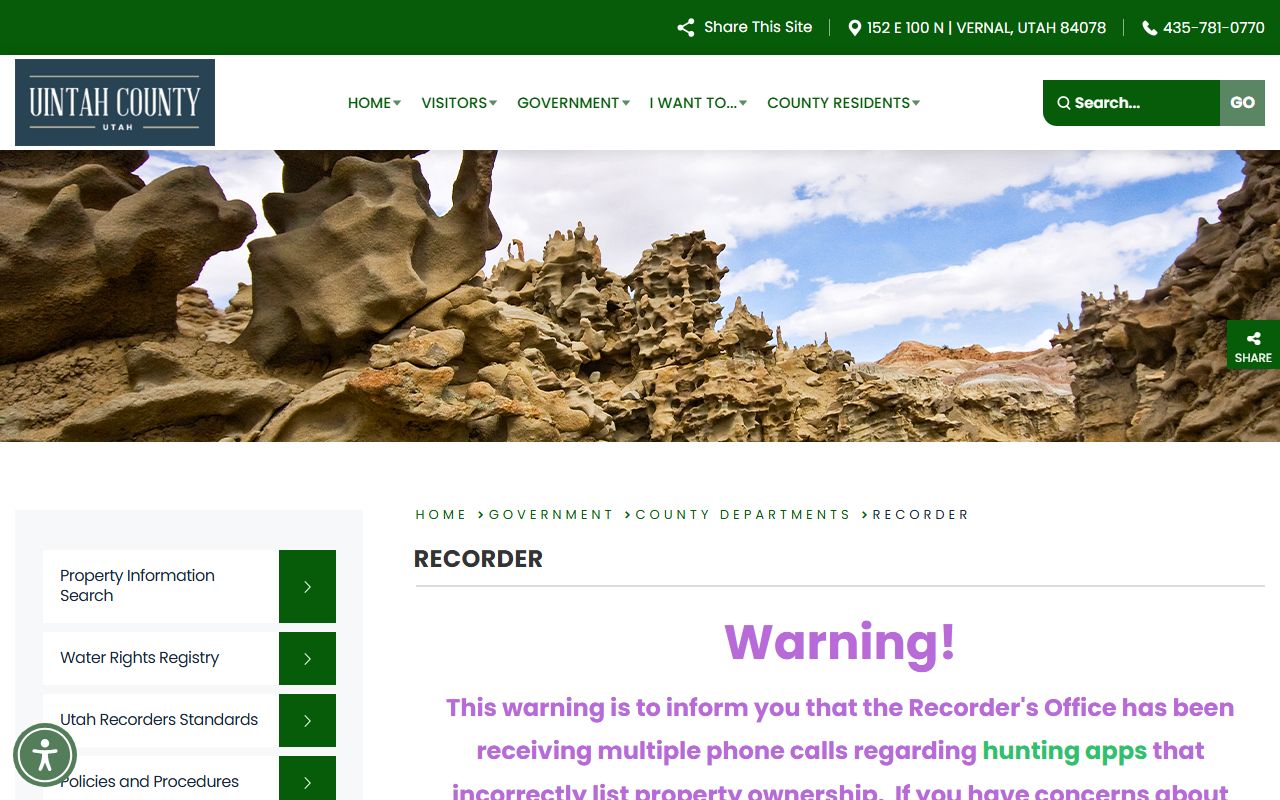
Start with the Recorder's site to search deed history, liens, oil and gas leases, and other recorded documents for any Uintah County parcel.
Note: Mineral rights are separate property interests that can be conveyed independently of surface rights. The Recorder's index includes both surface and subsurface conveyances in Uintah County.
Centrally Assessed Property in Uintah County
Uintah County is one of Utah's largest oil and gas producing counties. The oil and gas operations, pipelines, refineries, and other energy infrastructure in the county are not assessed by the county Assessor. Instead, they are centrally assessed by the Utah State Tax Commission under Utah Code Section 59-2-201. This distinction matters because it affects who you contact for assessment information on these types of properties and what the county's locally assessed roll actually includes.
Central assessment applies to properties that operate across county lines or that are difficult to value using standard local assessment methods. Oil and gas companies, utilities, railroads, and similar operations are centrally assessed at the state level. The Tax Commission assigns values to these properties and then apportions a share of that value to each county where the property operates. Uintah County receives a portion of the centrally assessed value that reflects the operations physically located within the county's boundaries.
The centrally assessed values contribute to Uintah County's overall tax base in a meaningful way. Oil and gas have historically been a major economic driver in the Uinta Basin, and the taxes paid on these operations flow through to fund county services, schools, and other local needs. When energy prices and production levels change, the centrally assessed values fluctuate, which can affect the county's overall tax revenue from year to year.
If you need to research the value of a centrally assessed property in Uintah County, the Utah centrally assessed property portal provides access to assessment records for these types of parcels. The portal is maintained by Utah counties and gives you a way to look up centrally assessed values without going through the county Assessor.
The image below is from the Utah centrally assessed property portal, which covers oil and gas, utility, and other centrally assessed properties across all Utah counties, including Uintah.
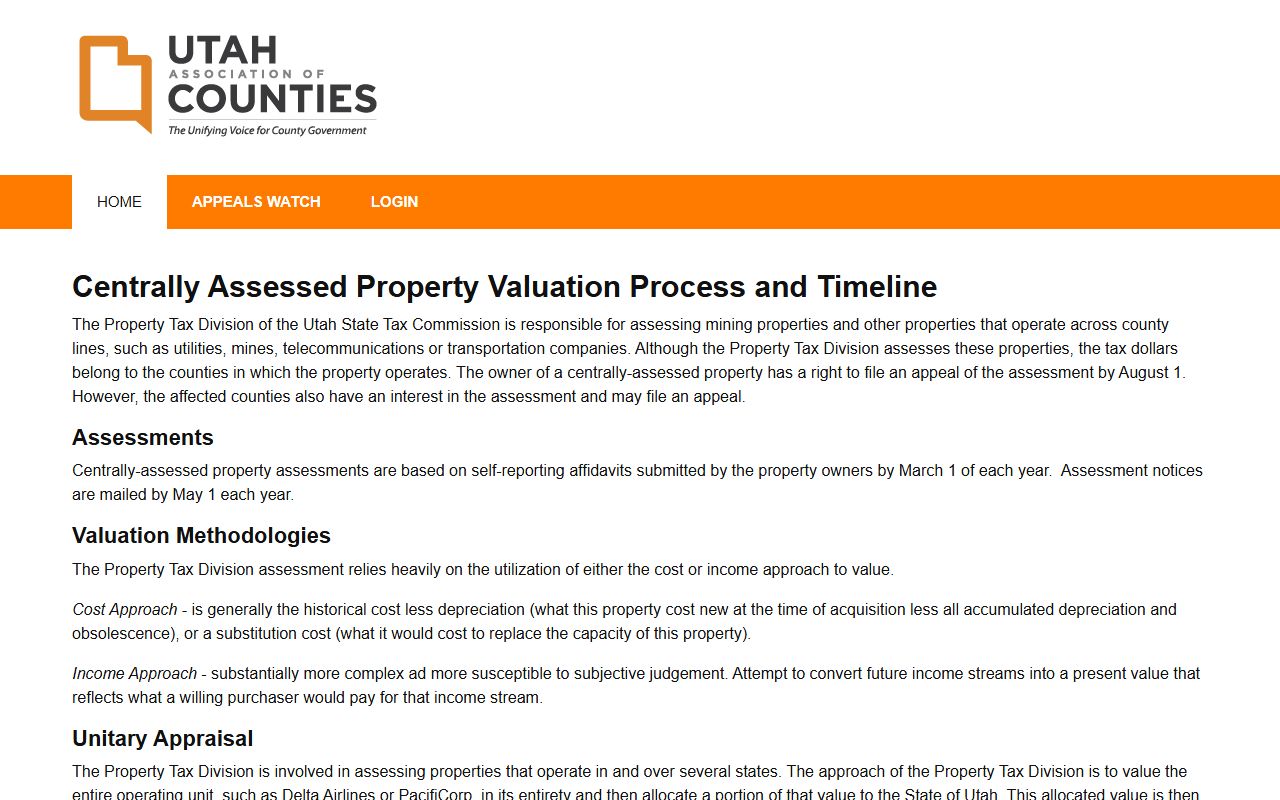
Use this portal to research centrally assessed property values for oil and gas operations and other state-assessed properties in Uintah County.
Uintah County Treasurer Tax Collection
The Uintah County Treasurer collects all property taxes and manages tax accounts for parcels throughout the county. Tax notices are mailed each fall with a full payment due date of November 30. Utah law also allows a split payment option with the first half due November 30 and the second half due May 31 of the following year. If November 30 passes without payment, the account becomes delinquent and interest begins to accrue under Utah state law.
For anyone purchasing property in Uintah County, a tax certificate from the Treasurer confirming there are no delinquent taxes is a standard step in the transaction. The Treasurer can provide current balances, payment history, and delinquency status for any locally assessed parcel. Note that centrally assessed property taxes are handled differently and may flow through a different channel, so if you are acquiring an interest in oil and gas or utility property, confirm the tax status through the appropriate channel as well.
Utah law allows counties to initiate a tax sale after five consecutive years of nonpayment. The Treasurer manages the delinquency list and the tax sale process. If you find a property in Uintah County that has not paid taxes for several years, the Treasurer can tell you where it stands in the delinquency and tax sale timeline. Properties sold at tax sale convey free of the prior owner's interest, subject to any redemption rights the prior owner retains under Utah law.
The Treasurer's office in Vernal accepts payment in person, by mail, and through online options when available. Contact the Treasurer directly or check the county website for current payment methods and any seasonal deadlines beyond the standard November 30 due date.
Property Tax Calculation in Uintah County
Uintah County property taxes follow the same calculation process as all Utah counties. The Assessor sets the fair market value of each locally assessed parcel as of January 1. For primary residences, 55% of that value is taxable after the 45% exemption. For all other property types, 100% of the assessed value is taxable. The taxable value is then multiplied by the total levy rate, which combines the rates set by all taxing entities that cover that parcel.
Uintah County's effective rate of 0.51% is below the statewide average for Utah. The taxing entities that make up this combined rate include the county general fund, school districts, water conservancy districts, and any special service districts covering a given parcel. Your annual tax notice shows each entity's share of the total levy. The PropertyTax101.org county rate comparison gives you context for how Uintah County's rate compares to other counties across Utah.
Utah's Truth in Taxation process governs any rate increases. If assessed values rise, taxing entities must lower their rates to avoid collecting more than the prior year's revenue unless they hold a public hearing and certify a higher rate. This process protects property owners from automatic tax increases when values rise, and it applies equally in Uintah County as in every other Utah county. Check the county website or local newspaper for notices of Truth in Taxation hearings when they occur.
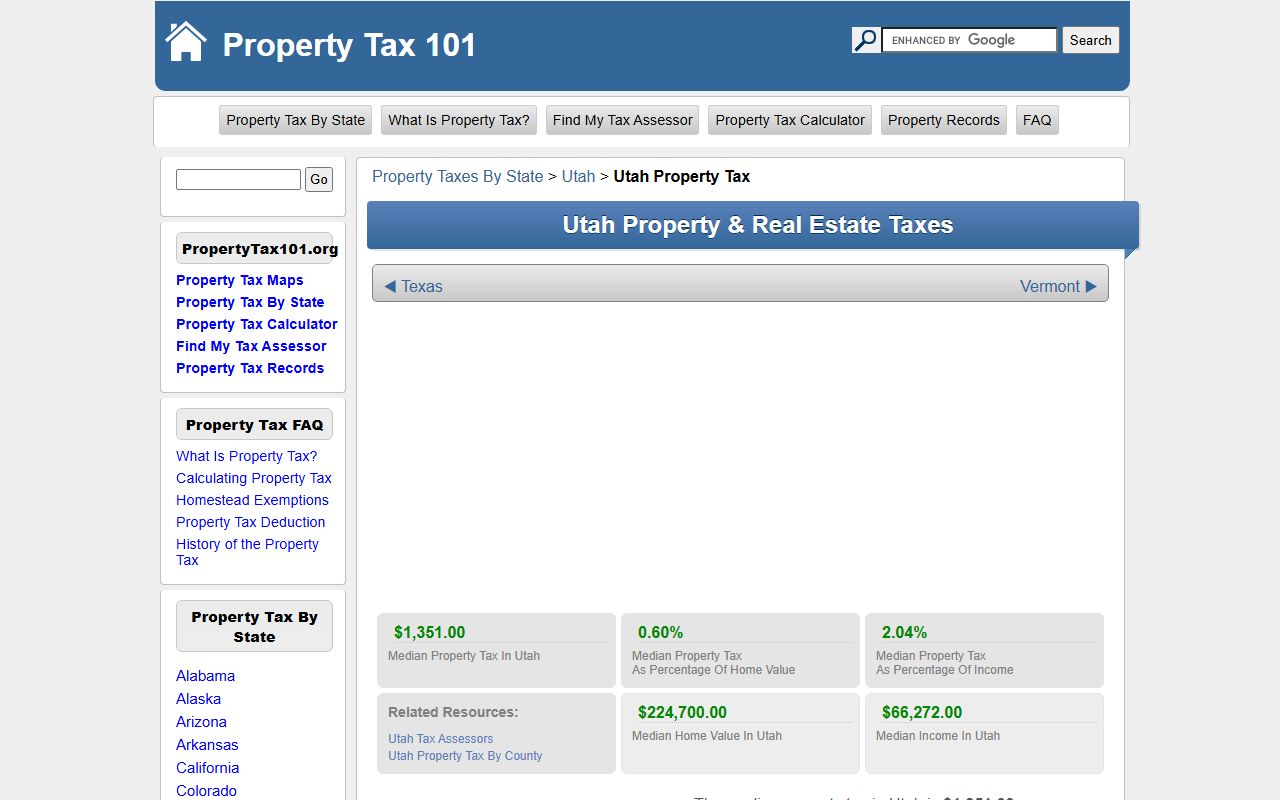
This statewide overview puts Uintah County's tax levels in context relative to all other Utah counties and provides historical rate data.
Note: The centrally assessed oil and gas values in Uintah County fluctuate with energy markets and production levels, which can shift the overall tax base year to year in ways that locally assessed residential property values do not.
Uintah County Property Tax Appeals
Property owners who disagree with their Uintah County assessment can appeal. The first step is an informal review with the Assessor's office in Vernal. Bring evidence of a lower market value: a licensed appraisal, comparable sales from similar properties in the Vernal area or elsewhere in the Uinta Basin, or documentation of physical issues that reduce the property's value. Many disputes are settled at this stage.
If the informal review does not resolve the matter, file a formal appeal with the Uintah County Board of Equalization before the September 15 deadline shown on your assessment notice. The Board conducts independent hearings and can adjust the assessed value based on the evidence presented. For properties affected by energy market fluctuations or other factors unique to the Uinta Basin, gathering solid comparable evidence is the key to a successful appeal.
After the Board of Equalization, the next level of appeal is the Utah State Tax Commission Property Tax Division. This is the final administrative step before district court. For centrally assessed property disputes, the process is somewhat different and goes directly through the State Tax Commission rather than the county Board of Equalization. Check the Tax Commission website for the specific procedures applicable to centrally assessed property appeals.
The Property Tax Division handles appeals from all 29 Utah counties and can guide Uintah County property owners through the state-level appeal process.
Online Search Resources for Uintah County
Several online tools let you research Uintah County property records without visiting Vernal in person. The county Assessor, Recorder, and Treasurer websites are the starting points for any parcel search or tax history lookup in the county.
For GIS parcel mapping, Uintah County provides access through its GIS portal. Parcel maps show boundaries, parcel numbers, and property details for all parcels in the county. The Utah statewide GIS portal also aggregates parcel data from all counties and can be useful for cross-county research or for comparing Uintah County parcel data against neighboring counties.
For the full text of Utah's property tax law, visit Title 59, Chapter 2 of the Utah Code on the Utah Legislature's website. This is the legal framework that governs all property tax activity in Uintah County, including assessment, exemptions, appeals, and tax sales. A version is also available through Justia's Utah property tax code pages for reference.
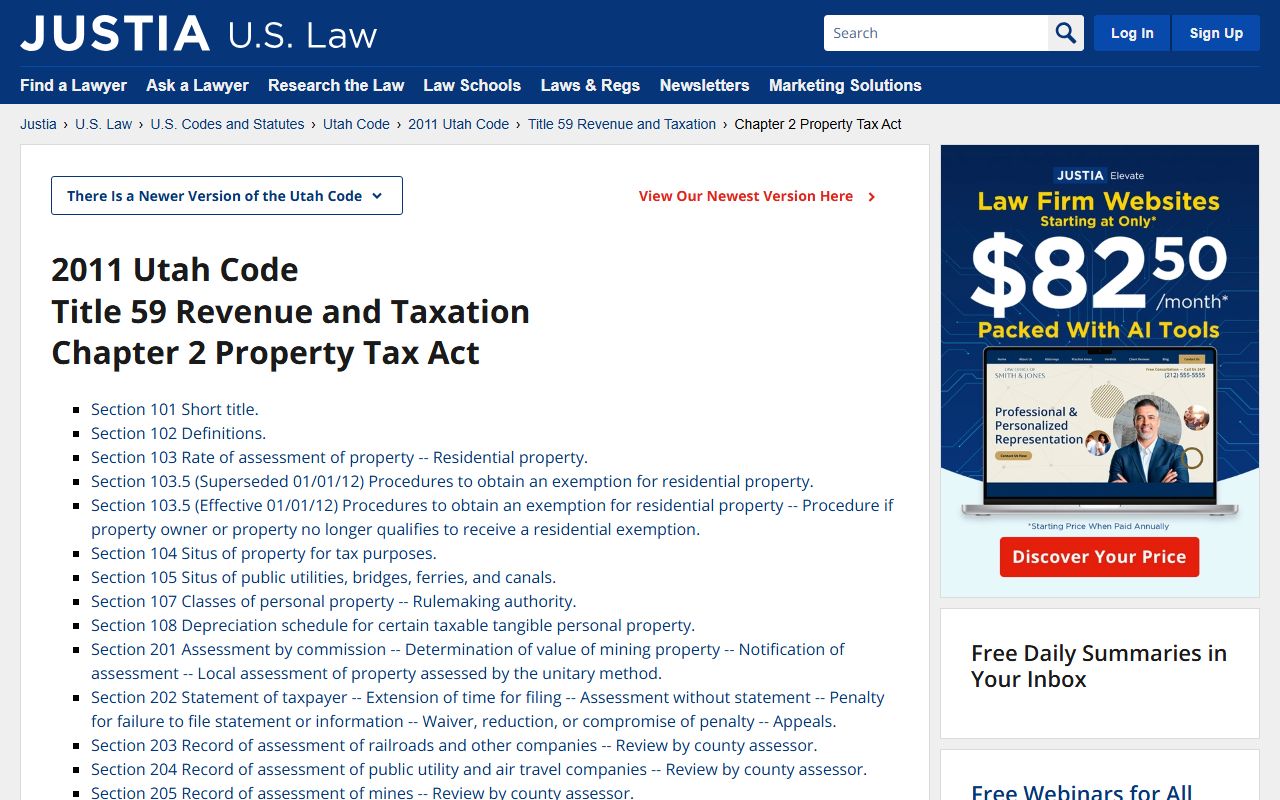
The Utah property tax code sets the rules for every aspect of property taxation in Uintah County, from assessment standards to tax sale procedures.
Cities in Uintah County
Uintah County is a rural northeastern Utah county with no cities that meet this site's population threshold for a dedicated city page. Vernal is the county seat and the main population center in the county. All property tax records for residents and property owners throughout Uintah County, including those in Vernal, are handled through the county offices described on this page. There are no city-level property tax records separate from the county system for communities within Uintah County.
Nearby Counties with Property Tax Records
Uintah County borders Duchesne County to the west, Grand County to the south, San Juan County to the southwest, Carbon County to the southwest, and Daggett County to the north along the Colorado and Wyoming borders. Each neighboring county has its own property tax offices and records systems.